Telemedicine in Remote India
Bringing care closer while protecting patients
Amulya Charan | Blog 101 | Updated 3 November 2026
The article in brief
Telemedicine can spare patients an avoidable journey and bring medical advice closer to remote communities. India has built a substantial public platform: eSanjeevani passed 50 crore consultations in September 2026. But consultation totals alone cannot establish better treatment, lower household costs or universal access. The next priority is dependable local support, appropriate clinical assessment, medicines, referrals and follow-up. Patient protection also needs accurate legal explanation. DISHA remained a draft; existing professional duties and applicable IT Act rules matter now, while the main obligations under the DPDP framework are scheduled for May 2027. This article examines what has changed, where the limitations lie and what patients and policymakers should expect. [1, 6–10]
A shorter journey to medical advice
Imagine a patient in a hill village who needs a doctor to review a test report. The consultation may take fifteen minutes. Reaching it can consume an entire day, involve a companion and mean wages lost as well as money spent. For that patient, a useful remote appointment is a practical improvement in everyday life.
Telemedicine offers India a way to bring clinical expertise closer to people who live far from it. Its value depends on what happens around the call: whether the right information is available, whether advice is understood and whether the patient can obtain the next step in care. A working camera cannot supply a missing medicine or arrange transport by itself.
India now has a public telemedicine network operating at considerable scale. The task is to connect this expanding service with dependable local healthcare, and to judge it by what it delivers to patients.
India now has a service at national scale
The scale of eSanjeevani shows how far remote consultation has travelled. A Health Ministry release of 6 October 2026 reported that the platform had crossed 50 crore cumulative teleconsultations on 15 September. It covered all 36 States and Union Territories and supported more than 1.42 lakh Ayushman Arogya Mandir spokes, 19,473 medical hubs and 901 online OPDs. The reported daily workload was approximately 2.5–3 lakh consultations. These are dated administrative figures, rather than live counts. [1]
This is substantial use, but the unit matters. Consultations are encounters; one person may account for several. They do not by themselves measure unique patients, successful treatment or journeys avoided. National coverage also does not establish that every village has an equally reliable service.
The assisted eSanjeevani service began in November 2019; the patient-to-provider OPD version followed in April 2020. The platform provides free teleconsultations. Patients may still face costs for connectivity, tests, medicines or travel when further care is needed. [2]
Why local healthcare still matters
For a remote community, healthcare access is best understood through the services available within reach. A doctor may be present at a primary health centre while a particular specialist remains several hours away. An appointment can still be difficult to complete if it involves transport, an accompanying family member and another trip to collect reports. Planning needs to start with those journeys.
The Health Ministry’s Health Dynamics of India publication provides a more useful starting point. It reports infrastructure and staffing across rural, urban and tribal areas and across States and Union Territories. Its 2022–23 edition describes the position as of March 2023; it should not be presented as a census of facilities in 2026. District planning should use these distinctions rather than a national average alone. [3]
Affordability remains central. The National Health Accounts estimates released in May 2026 put household out-of-pocket spending at 43.4 per cent of total health expenditure in 2022–23. That is a national financing measure, not an estimate of what telemedicine saves. A programme claiming savings should measure patients’ actual expenditure before and after using its service. [4]
For planners, a useful starting exercise is to map the journeys that could safely be avoided and the journeys that must become faster. The answers may differ for a stable patient collecting follow-up advice, a person needing diagnostic tests and someone requiring urgent hospital treatment.
Two routes to the doctor
eSanjeevani has two main delivery routes. In the assisted model, local healthcare personnel connect the patient with a clinician at a medical hub. In the direct model, the patient accesses a doctor remotely. These routes serve different circumstances and can coexist. [2, 5]
For a person comfortable with a smartphone, a home appointment may be convenient. For someone who cannot upload records, lacks a private room or needs help explaining symptoms, an assisted consultation may be more useful. The local worker’s time, training and availability should therefore be treated as part of the service.
A sensible design would let the patient leave with a clear plan: what has been advised, which test or medicine is needed, where it is available and how to seek further help. These details deserve as much attention as registration and connection speed.
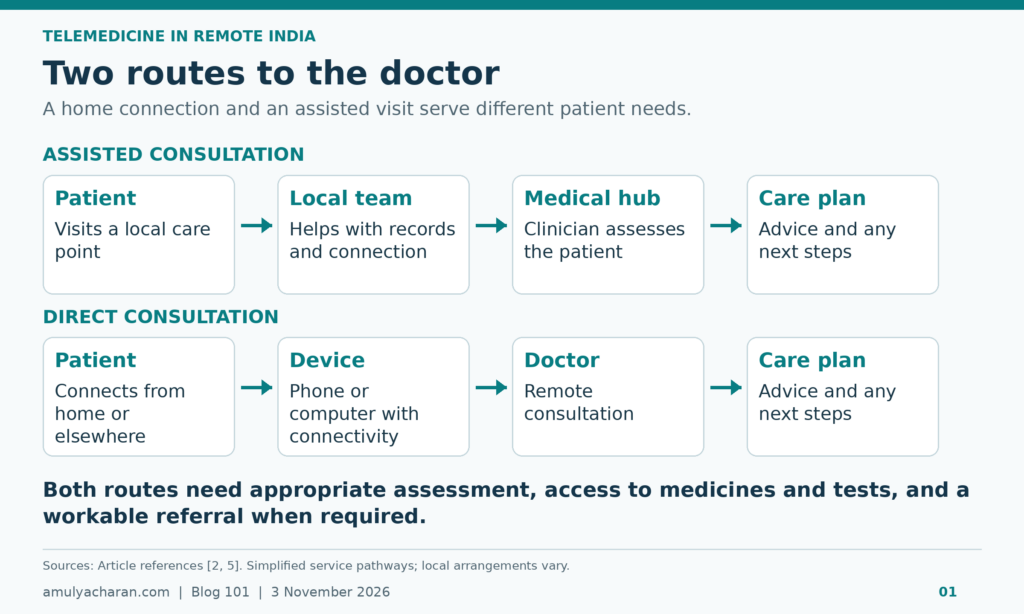
Figure 1. Two routes to remote consultation. Sources: [2, 5].
Clinical limits must remain visible
India’s Telemedicine Practice Guidelines, issued on 25 March 2020, place the decision about suitability with the registered medical practitioner. When a physical examination is essential, the doctor should arrange or recommend in-person assessment. Remote prescribing is restricted by the consultation type, communication mode and permitted medicine categories; it is not an unrestricted online prescription service. [6]
In emergencies, the guidelines limit remote care to measures such as first aid, immediate advice and referral, with in-person medical attention at the earliest. A patient should not delay urgent treatment while waiting for an online appointment. [6]
These limits should shape public communication. Claims that every patient can obtain a specialist diagnosis from home, or that monitoring devices automatically prevent complications, promise more than a platform can guarantee. A better question is whether the service recognises its limits promptly and helps the patient reach appropriate care.
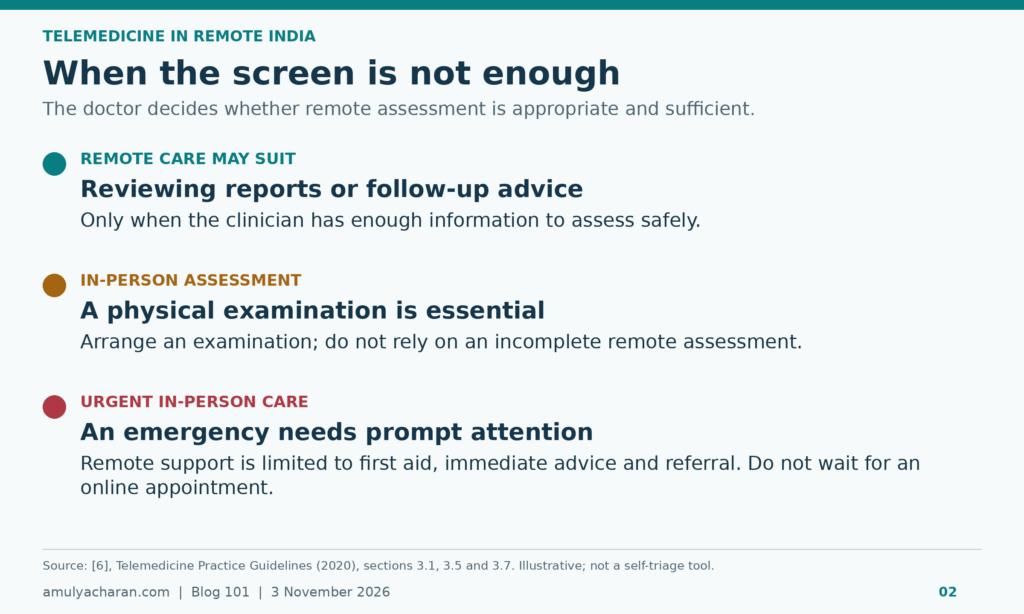
Figure 2. Clinical limits and the need for in-person care. Source: [6].
Connectivity needs a more careful description
BharatNet is important, but its targets and completed work should not be confused. A government statement published in August 2026 reported about 2.21 lakh gram panchayats as service-ready under BharatNet as of June 2026. The figure describes a specific stage of network readiness, rather than the quality of service at every rural clinic. [7]
A service-ready panchayat does not prove that a consultation room has uninterrupted electricity, functioning equipment or a usable connection throughout clinic hours. Each participating facility should test those conditions directly, including what happens when a call fails.
Local-language assistance, simple instructions and accessible interfaces should be planned from the beginning. WHO and ITU have published an accessibility standard for telehealth because people with disabilities can face barriers even when services are technically available. Indian programmes can use that work to guide design and procurement. [13]
Protecting patient information under the right laws
Patients deserve clear information about how their records are protected. That explanation must begin with the law actually in force. The proposed Digital Information Security in Healthcare legislation, or DISHA, was circulated for consultation in 2018. It did not become law. Mandatory encryption, localisation or consent requirements should therefore not be attributed to it. [8]
Existing duties remain important. Under the Telemedicine Practice Guidelines, consent to consultation is implied when the patient initiates it; explicit consent must be obtained and recorded when a doctor, health worker or caregiver initiates it. Doctors also have confidentiality duties. Consultation consent should not be read as unrestricted permission to reuse medical information. [6]
For covered entities, Section 43A of the Information Technology Act and the Sensitive Personal Data or Information Rules, 2011 remain relevant during the transition. Health conditions and medical records are sensitive information under Rule 3. Rules 4–6 address privacy policies, collection, consent and disclosure; Rule 8 addresses reasonable security practices. Applicability depends on the entity and arrangement, including the government’s 2011 clarification concerning processing under contract. [9]
The Digital Personal Data Protection Act, 2023 and its 2025 Rules are being introduced in stages. Enactment and notification should not be mistaken for commencement of every obligation. As of 3 November 2026, the main processing obligations and individual rights described below are still scheduled for the later phase. [10–11]
| Phase | What it means |
| November 2025 | Initial provisions concerning definitions, the Board and supporting machinery commenced; specified Rules also began. |
| November 2026 | The next phase covers Consent Manager registration and associated provisions. |
| May 2027 | Most processing obligations and individual rights are scheduled to begin, including notice, consent, security and breach reporting. Section 44(2), removing IT Act Section 43A, is in this phase. |
Sources: Commencement notification G.S.R. 843(E) and DPDP Rules 2025, Rule 1. [10–11]
Once operative, DPDP Rule 6 will require safeguards including appropriate measures such as encryption, masking or tokenisation, with access controls and monitoring. It does not prescribe end-to-end encryption for every teleconsultation. Section 7 of the Act also recognises specified legitimate uses, including medical emergencies; consent is not its sole lawful basis in every circumstance. [10–11]
Nor is there a universal requirement that every patient record remain in India. SPDI Rule 7 permits overseas transfers subject to equivalent protection and contractual-necessity or consent conditions. DPDP Section 16 allows notified country restrictions; Rules 13(4) and 15 provide for specified additional restrictions when operative. Programme, contractual or other applicable requirements may be tighter. Providers must check their own position. [9–11]
Digital health records need meaningful consent
Ayushman Bharat Digital Mission provides infrastructure for interoperable health records. Its ABHA identifier is voluntary. Creating an identifier and authorising a particular exchange of records are different decisions. The government states that health-data exchange within ABDM requires patient consent and that applications undergo security checks before integration. These are programme requirements, not proof that DISHA was enacted. [12]
The practical test is whether a patient understands which records will be shared, with whom and for what purpose. An assisted service should explain this in a language the patient understands and provide a way to ask questions. Staff should avoid turning a busy consultation into an automatic approval of every request presented on a screen.
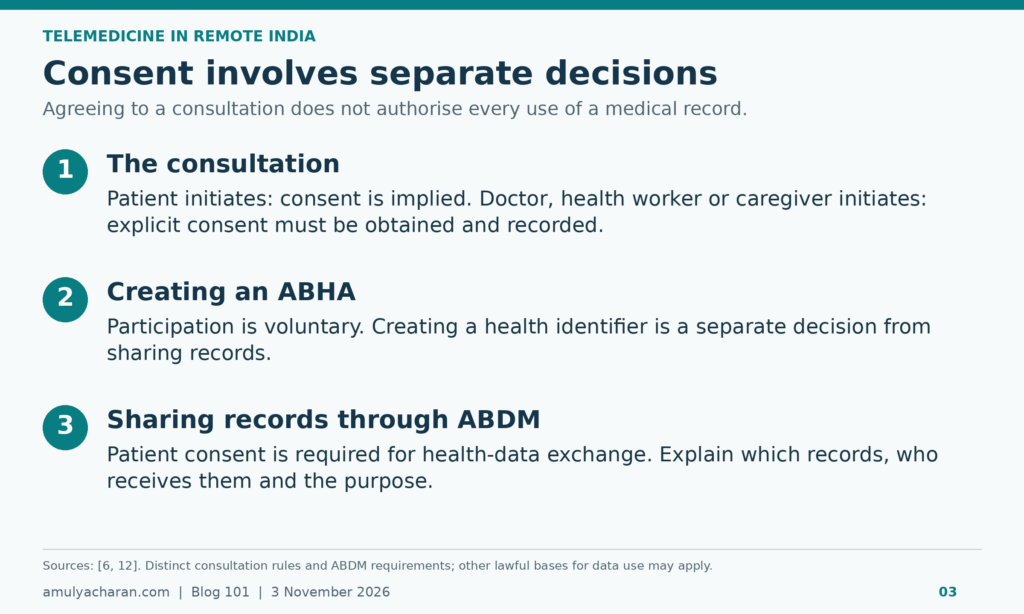
Figure 3. Consultation, ABHA creation and record sharing involve separate decisions. Sources: [6, 12].
Technology should support clinical judgement
Digital tools are developing beyond the video appointment. The Health Ministry’s October 2026 update describes AI-assisted clinical decision support on eSanjeevani and specialist OPD services at selected institutions. It is reasonable to expect further development, but announcements of deployment do not establish diagnostic accuracy or improved outcomes. [1]
Procurement should ask what each tool has been tested to do, for which patients and under what conditions. A pilot that works in one setting should earn its expansion through evidence from the next. Equipment also needs maintenance, consumables, training and someone responsible when it stops working.
Budget for a continuing service
A district should resist a budget built around buying screens and connecting rooms. It needs to fund staff time, clinical availability, equipment upkeep, connectivity, privacy safeguards, record management and follow-up. WHO’s consolidated implementation guide places planning, implementation, maintenance and a costed investment plan within the same programme. [14]
There is no defensible universal price for a teleconsultation centre or a diagnostic van without specifying staffing, services, location and equipment. A basic consultation room and a vehicle carrying diagnostic equipment are different investments. Annual costs also change with workload and the specialist support promised.
Public purchasers should specify availability, response times, data handling and referral responsibilities in contracts. Private providers and philanthropic funders can contribute capacity, but a short grant should not create a service that disappears once the equipment has been installed. Continuity needs an identified budget and accountable management.
What India can learn from global practice
Australia offers a useful example of making remote care part of routine financing. Expanded telehealth became an ongoing part of Medicare in January 2022. Services remain subject to clinical and benefit rules. The lesson for India is to examine how suitable remote consultations are paid for and connected with continuing care, rather than assume that a temporary pilot will sustain itself. [15]
WHO’s implementation guide and the WHO–ITU accessibility standard offer complementary lessons: organise the service around its users, maintain it over time and design for people who might otherwise be excluded. These are more useful benchmarks than broad claims that another country has already solved rural healthcare through technology. [13–14]
Measure what happens after the call
The next phase should retain activity counts but add measures that patients would recognise: appointments completed, waiting time, expenditure incurred, referrals completed and follow-up received. Failed connections and repeat appointments caused by missing information should be visible too.
Clinical services should select outcome measures appropriate to their work and use suitable evaluation methods. A programme should not claim that telemedicine caused better health merely because its users improved; other treatment, selection of patients and changes over time may explain part of the result. Independent evaluation would make successful services easier to defend and weaker ones easier to improve.
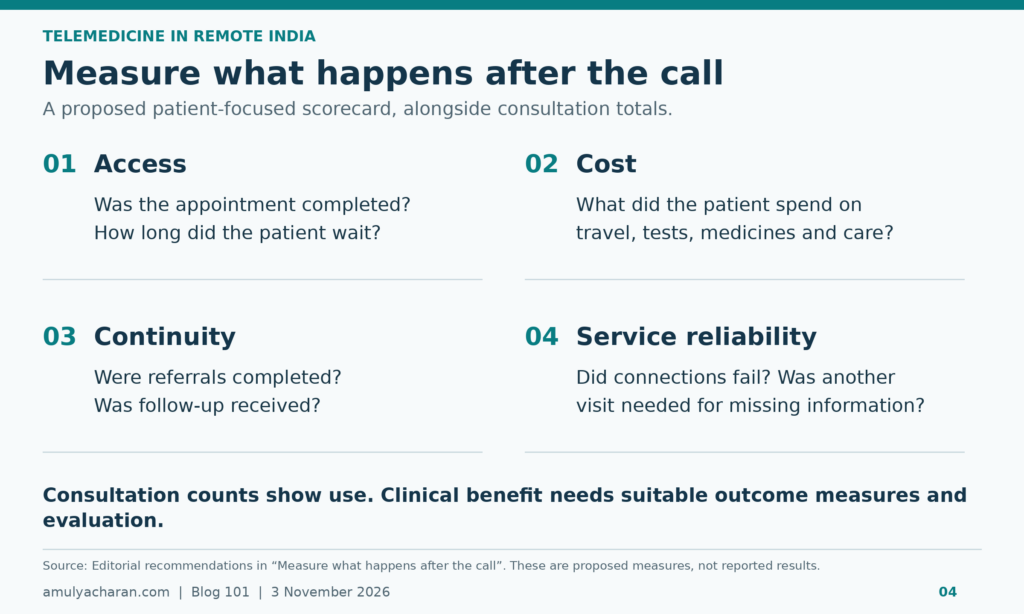
Figure 4. Suggested measures of a dependable service. Editorial recommendations; not measured results.
India has demonstrated that remote consultations can operate at considerable scale. The next achievement should be a dependable pathway through care. For the patient in the hill village, success means clear advice, an affordable next step and help reaching a doctor in person when that is needed. That is the standard by which expansion deserves to be judged.
References
Sources checked for this revision on 3 November 2026. Numbered citations refer to this list. Dates attached to statistics identify the reporting period; figures are not live dashboard totals.
[1] Ministry of Health and Family Welfare. eSanjeevani crosses 50 crore teleconsultations. 6 October 2026.
Milestone date, network scale, daily activity and reported service developments.
[2] Rajya Sabha and Ministry of Health and Family Welfare. Unstarred Question 271 on strengthening telemedicine and digital health services. 2 December 2025.
Launch dates, two service variants, free consultations and ABDM integration.
[3] Ministry of Health and Family Welfare. Release of Health Dynamics of India 2022–23. 9 September 2024.
Scope and reporting period of the infrastructure and workforce publication.
[4] Ministry of Health and Family Welfare. National Health Accounts estimates for India 2022–23. 27 May 2026.
Out-of-pocket expenditure as a share of total health expenditure.
[5] Centre for Development of Advanced Computing. eSanjeevani National Telemedicine Service. Product information page.
Assisted and direct consultation models; figures on this page have their own reporting date.
[6] Board of Governors in supersession of the Medical Council of India. Telemedicine Practice Guidelines. 25 March 2020.
Sections on suitability, patient consent, evaluation, prescribing, emergencies, confidentiality and records.
[7] Ministry of Electronics and Information Technology. Government expands digital infrastructure and citizen services. 6 August 2026.
BharatNet service-ready gram panchayats as of June 2026.
[8] Ministry of Health and Family Welfare. Notice inviting comments on draft DISHA. 21 March 2018.
Confirms consultation draft status; not enacted legislation.
[9] Government of India. SPDI Rules 2011 and clarification of application. 11 April and 24 August 2011.
Rules 3–8, made under IT Act Section 43A. Government clarification: https://www.pib.gov.in/newsite/erelcontent.aspx?lang=2®=48&relid=74990
[10] Government of India. Digital Personal Data Protection Act 2023 and commencement notification. 2023 and November 2025.
Sections 4–8, 16 and 44(2). Official commencement notification G.S.R. 843(E): https://www.meity.gov.in/static/uploads/2025/11/c56ceae6c383460ca69577428d36828b.pdf
[11] Ministry of Electronics and Information Technology. Digital Personal Data Protection Rules 2025. November 2025.
Rules 1, 4, 6, 7, 13(4) and 15. Official publication page, including December 2025 corrigendum: https://www.meity.gov.in/documents/act-and-policies/digital-personal-data-protection-rules-2025-gDOxUjMtQWa
[12] National Health Authority and Ministry of Health and Family Welfare. ABHA fundamentals and ABDM cybersecurity safeguards. Official programme information and 5 August 2025.
Voluntary ABHA participation. Consent and security statement: https://www.pib.gov.in/PressReleasePage.aspx?PRID=2152537
[13] World Health Organization and International Telecommunication Union. Global standard for accessibility of telehealth services. 2022.
Accessible service design; the standard does not automatically become Indian law.
[14] World Health Organization. Consolidated telemedicine implementation guide. 9 November 2022.
Planning, implementation, maintenance and costed investment.
[15] Australian Government Department of Health Disability and Ageing. Telehealth. Official information page.
Ongoing Medicare telehealth arrangements from January 2022.
[16] National Medical Commission. Professional Conduct Amendment Regulations 2023. Notification of 23 August 2023.
Placed the August 2023 regulations in abeyance and restored the 2002 ethics regulations; replaces the original article’s unqualified 2023 code reference.
[17] Ministry of Electronics and Information Technology. DPDP Removal of Difficulties Order 2026. Order dated 5 October 2026.
Textual corrections concerning Sections 9 and 10; does not replace the phased commencement schedule.