India’s Banks: What Has Improved—and What Still Fails the Customer?
By Amulya Charan | 2 November 2026
A reassuring banking statistic answers one question: how strong is the institution holding our money? It does not answer all the others. Will the bank explain its charges? Will it sell us a suitable product? Will someone take responsibility when a payment goes wrong?
India needs to ask these questions together. Its banking system has emerged from a difficult period of bad loans with much stronger balance sheets. The next stage of reform should make that strength more visible in everyday banking: dependable access, understandable products, fair credit decisions and complaints that reach a resolution.
That is a demanding agenda. A solvent bank can still be difficult to deal with. Equally, an unhappy customer’s experience cannot establish that the whole system is deteriorating. The evidence deserves more care than either conclusion allows.
The clean-up deserves its credit
The improvement in asset quality is substantial. Reporting on the RBI’s June 2026 Financial Stability Report put banks’ gross non-performing loan ratio at 1.8% at the end of March 2026. Under the report’s baseline scenario, it could edge up to 1.9% by March 2028. That is a conditional scenario, not a promise that future shocks will be harmless. [1]
For a depositor, stronger asset quality matters because loans that are not repaid weaken the institution entrusted with savings. For a business, a healthier bank is better placed to consider a new loan. Neither benefit should be dismissed simply because service remains uneven.
But low bad-loan ratios are not a certificate for every bank, every loan book or every future lending decision. Banking strength also depends on capital, liquidity, governance and operational resilience. The sensible conclusion is that the system has improved, while supervision and institution-specific scrutiny remain necessary.
We should apply the same discipline to the customer side. “Banks are stronger” and “customers deserve better treatment” can both be true. The task is to identify where service fails and what would change it.
Access means being able to use the account
Opening an account is an important beginning. Useful access requires more: a way to transact, an affordable service, a workable process for updating documents and someone to explain a problem when the normal channel fails.
Consider an illustrative customer who receives a pension into an account but depends on another person to operate the phone. A digital service may be available without being independently usable. Another customer may transact comfortably online until a disputed debit requires a conversation that the app cannot provide. These are examples of the questions service design should address, not reported individual cases.
Basic accounts also need to be distinguished from ordinary savings products. RBI’s Basic Savings Bank Deposit Account framework provides for an account without a minimum-balance requirement and a set of basic facilities. It would therefore be misleading to suggest that minimum-balance charges apply to every small depositor. [2]
Banks should make that distinction easy to understand at the point of opening. Customers ought to know which facilities are included, what additional services cost and whether the chosen account suits the way they will use it.
A useful measure of inclusion would ask whether people can operate their accounts safely and obtain help. Counting accounts alone cannot tell us that.
What the complaints actually show
The RBI’s Ombudsman report records 13,34,244 complaints under its framework in FY2024–25, up 13.55%. That is significant, but it is not a count of proven bank failures. The framework includes non-maintainable submissions and complaints covering other regulated entities. [3]
The Ombudsman offices themselves received 2,96,321 complaints, up just 0.82%. Complaints there per lakh accounts fell from 8.9 to 7.7, while mobile and electronic banking complaints declined 12.74%. Private banks accounted for 37.53% of complaints at those offices; public banks accounted for 34.80%. Those shares do not, on their own, establish which group provides better service. [3]
The report also provided for recovery of ₹7.18 crore in complaint-redress costs from 31 banks. This mechanism puts some of the cost of unresolved complaints back on the banks concerned. [3]
The practical question is what happens before escalation. Customers should receive a clear explanation, a reference number and a realistic next step. Banks should measure repeat complaints and whether a purported resolution actually fixes the problem.
Selling a product is a responsibility
A bank branch is a place where customers may reasonably expect financial guidance. That makes product sales an area requiring particular care. A person seeking a deposit should understand when the conversation has shifted to an insurance policy, investment product or another provider’s service.
There is nothing inherently wrong with distributing those products. The difficulty arises when trust in the bank substitutes for an explanation of risk, commitment and suitability. Nor should a customer have to buy an unrelated product to obtain the service originally requested.
The RBI’s June 2026 amendment to its commercial-bank conduct directions, scheduled to take effect on 1 January 2027, strengthens the framework for advertising, marketing and sales. It addresses explicit consent, unsuitable sales, compulsory bundling and deceptive digital design. Importantly, an unsuitable sale may count as mis-selling even where consent was obtained. [4]
The rules prohibit employees receiving incentives directly or indirectly from third-party providers. Where a third-party product is required as a risk mitigant, customers must have provider choice. Established mis-selling attracts a refund and compensation provisions, subject to the applicable framework and complaint timelines. [4]
The test will be how banks implement this. A signature should record an informed choice, not merely finish a sales process. Management should examine whether its own targets reward behaviour that the conduct policy prohibits.
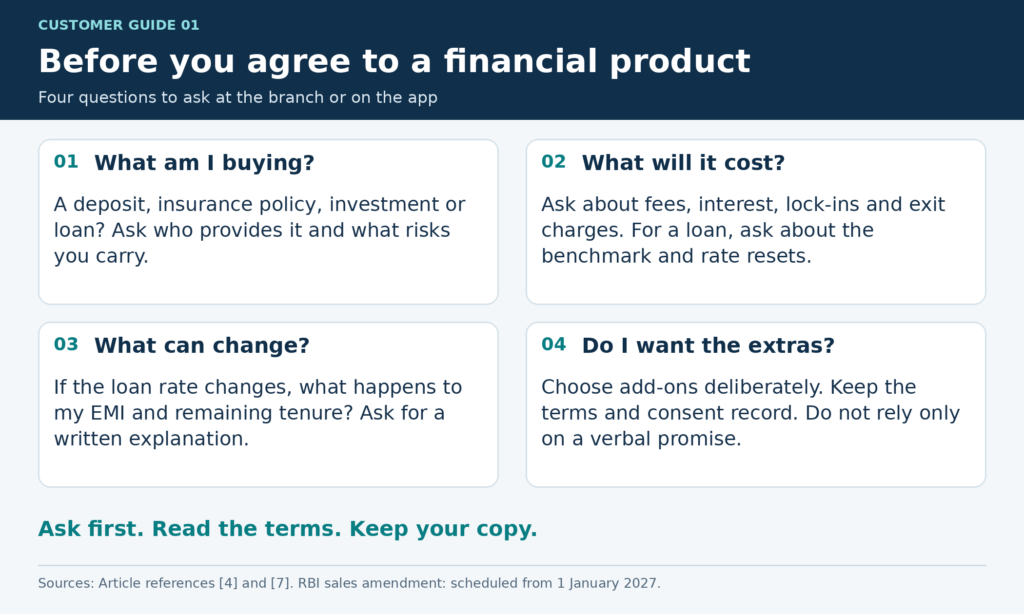
Figure 1. Questions to ask before agreeing to a financial product. Sources [4] and [7].
Savers deserve an intelligible bargain
Customers should be able to find out what their savings earn and what their account costs without navigating several documents. Savings deposit rates are set by banks within the regulatory framework, rather than fixed centrally for all banks. [5]
A low nominal rate can also produce a weak inflation-adjusted return. But that comparison must use a specified rate and period. It should not become an argument that every saver ought to move into equities or mutual funds. Those products involve different risks and serve different purposes.
A household may need money available immediately for bills, a separate emergency reserve and longer-term savings. A bank should help the customer understand the options without suggesting that every available balance belongs in a product carrying a commission.
The deposit debate also needs clearer language. If money moves from a savings account into a fixed deposit, the bank may face a higher funding cost, but the money has not necessarily left banking. A changing deposit mix is not, by itself, proof that savers have abandoned the system.
A practical reform would be a standard comparison of account charges, alongside clear explanations of deposit options, access conditions and premature-withdrawal consequences. Convenience should not depend on customers overlooking the cost.
Small businesses need a fair hearing
The July 2026 SIDBI–TransUnion CIBIL report identifies a substantial gap between business registration and credit experience. It records 8.7 crore registered MSMEs as of December 2025, compared with 3.6 crore that had ever accessed formal credit as of March 2026. [6]
Those figures should not be converted into a rejection rate. A business may not have applied or needed to borrow. The report also shows different lender roles, including public-sector banks supporting entry-level enterprise access below ₹10 lakh exposure. [6]
The question is how to assess a viable applicant with limited collateral or a short formal history. A lender needs evidence of repayment capacity; the borrower needs a decision that reflects the business rather than only the property it owns.
With appropriate consent and safeguards, better use of transaction records could help. But additional data do not make poor lending sound. Banks need ways to challenge inaccurate information, explain refusals and review decisions where the evidence warrants it.
Consider a clearly illustrative workshop with regular orders but slow-paying customers. A term loan for another machine may be less useful than working capital. If the workshop must repeatedly borrow because its buyer never pays on time, the financing problem also requires attention to payment practices.
That is why customer service and credit policy belong in the same discussion. A borrower who cannot understand the decision cannot correct a deficient application or compare alternatives effectively.
Rate relief should be visible to borrowers
RBI’s current commercial-bank lending-rate directions require external benchmarking for specified floating-rate retail and MSME loans, while recognising legacy benchmark arrangements. External-benchmark rates must reset at least once in three months. Different products and contracts still need to be distinguished. [7]
The effect of a rate change should be stated plainly. If the outstanding principal and EMI remain unchanged, a lower interest rate normally shortens the remaining tenure. It does not lengthen it. Alternatively, the instalment may fall while the tenure remains unchanged.
A borrower should receive an explanation showing what changed in the rate, instalment, remaining term and expected interest payable. Comparisons with offers for new customers should account for benchmark, spread, fees and borrower circumstances, rather than assuming that every difference is improper.
There is a straightforward service standard here: the customer should be able to understand the loan without reconstructing its arithmetic from scattered messages.
Fraud figures need their footnotes
The total includes 314 earlier-year cases involving ₹30,199 crore, reported afresh following re-examination and compliance with the Supreme Court’s March 2023 judgment. Advances-related cases involved ₹40,774 crore; the category does not separately identify corporate borrowers. [8]
RBI’s FY2025–26 annual report records 10,114 fraud cases involving ₹48,021 crore, compared with 23,722 cases involving ₹32,803 crore a year earlier. The amount involved is not the actual loss. Recoveries matter, and the entire reported amount need not have been diverted. [8]
Card, internet and digital-payment cases in this series fell to 293, involving ₹29 crore. However, the tables cover bank-reported frauds of ₹1 lakh and above. They are not a comprehensive measure of household scam losses. [8]
For customers, the useful question is whether suspicious activity can be reported quickly and investigated properly. Responsibility should follow evidence rather than an assumption that either the bank or the customer must always bear the loss.
Protection depends on what went wrong
RBI’s unauthorised-electronic-transaction framework distinguishes bank deficiencies, third-party breaches and customer negligence. Reporting speed matters in specified circumstances. A payment that a customer was deceived into authorising raises different issues; a promise of automatic reimbursement would be unsafe. [9]
Customers should contact their bank immediately through an independently verified channel when something appears wrong, preserve transaction details and retain the complaint acknowledgment. Banks should make urgent reporting accessible to people who cannot navigate an app, as well as those who can.
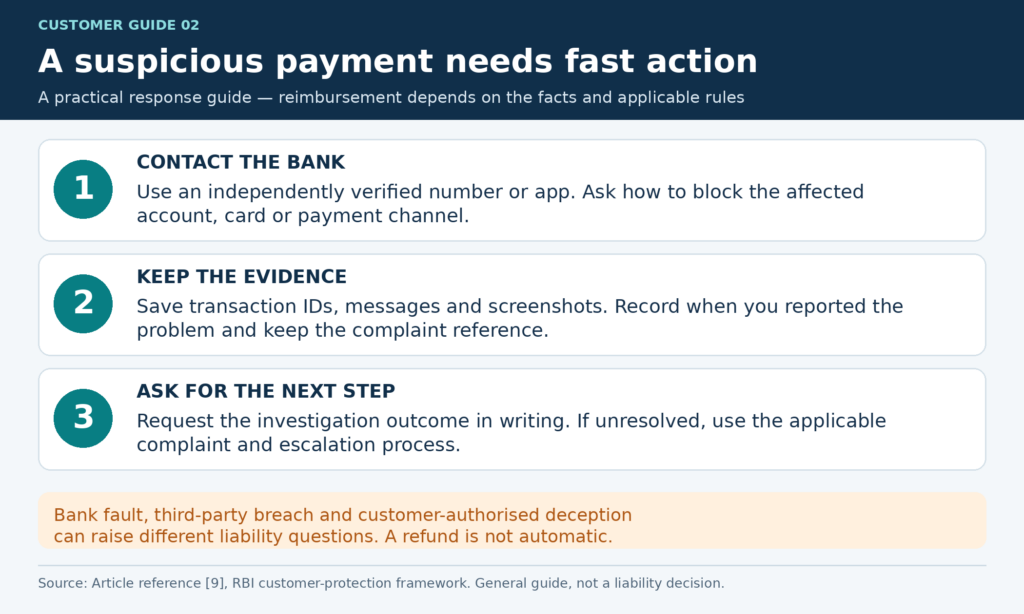
Figure 2. A response guide for a suspicious payment. Source [9].
Deposit insurance addresses a different risk. DICGC covers eligible deposits up to ₹5 lakh, including principal and interest, per depositor per insured bank in the same right and capacity. Accounts across branches of the same bank are aggregated; eligible deposits at separate banks receive separate coverage. This is protection in specified bank-failure or withdrawal-restriction circumstances, not insurance against every fraudulent debit. [10]
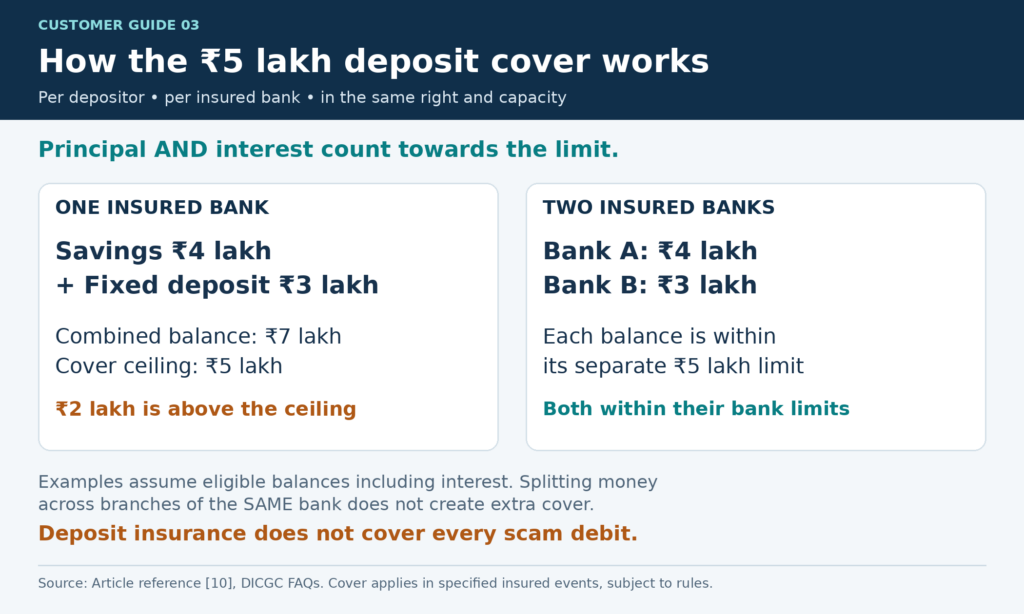
Figure 3. Illustrative deposit insurance examples. Source [10].
Forgotten deposits require a different remedy again. RBI’s UDGAM portal helps users search for unclaimed deposits and find the relevant bank’s process. It does not itself settle the claim; the claimant must approach the bank. [11]
These distinctions deserve a place in ordinary customer communication. A protection that people misunderstand can offer false reassurance precisely when they need dependable guidance.
A more useful reform agenda
The ownership debate will continue, but customers need standards that apply across ownership models. Claims for either public or private banking should be tested against evidence on access, sound lending, costs and accountability.
I would put five practical improvements near the top of the agenda.
First, make the cost of a banking relationship understandable. Comparable charges and clear account choices would help customers judge value before they commit.
Second, judge product sales by suitability and informed understanding. Review incentives, retain meaningful consent records and investigate whether complaints reveal recurring sales practices.
Third, improve explanations of credit decisions. Better assessment should widen opportunities for viable firms without asking lenders to ignore repayment risk or customers to surrender privacy indiscriminately.
Fourth, make complaint handling answerable for outcomes. A closed ticket should not automatically count as a solved problem. Recurring grievances should reach the people who can change the underlying process.
Finally, design urgent fraud response around the customer’s circumstances. Reporting, acknowledgment and coordination should work under stress, including for someone who needs a person rather than another menu.
These proposals require investment and judgement. Their value should be assessed through fewer repeat failures, clearer decisions and more dependable access—not simply another feature launched or form completed.
Strength that customers can recognise
India’s banking discussion should give proper credit to the improvement in financial resilience. It should also ask more of institutions whose decisions affect household security and business survival.
The customer’s test is concrete. Can I understand what I am buying? Can I access my money? Will my business receive a fair assessment? When something fails, will the bank explain what happened and take responsibility for its part?
A stronger banking system gives India a better foundation for answering those questions. The next reform should make that improvement evident at the counter and on the phone, especially when a customer needs help.
References
Numbered references correspond to citations in the article. Source material was reviewed on 2 November 2026. Historical data retain their stated dates. Policy proposals and illustrative examples are identified in the text.
[1] Reuters, syndicated by Business Recorder. Indian banks’ bad loans to remain below 2% through 2028, RBI report says. 30 June 2026. Reporting on the RBI Financial Stability Report; supports the dated GNPA figure and conditional baseline scenario. Read source
[2] Reserve Bank of India. Financial Inclusion—Access to Banking Services—Basic Savings Bank Deposit Account. RBI/2012-13/164, 10 August 2012. Foundational framework; cited here for the no-minimum-balance principle, not as an exhaustive statement of all subsequent account rules. Read source
[3] Reserve Bank of India. Annual Report of Ombudsman Scheme, 2024–25. 1 December 2025. Executive summary, Table 1.1, complaint categories and Chapter 3 paragraph 3.7. Historical reporting period, not a statement of current complaint volumes. Read source
[4] Reserve Bank of India. Commercial Banks—Responsible Business Conduct Second Amendment Directions, 2026. RBI/2026-27/115, 15 June 2026; scheduled commencement 1 January 2027. Full notification reproduced by TaxGuru, including paragraphs 85G–85ZA. Read source
[5] Reserve Bank of India. Master Circular on Interest Rates on Deposits, 2014. Section 4.2 documents deregulation of resident savings deposit rates. Used for the distinction between bank-set and centrally administered rates. Read source
[6] SIDBI and TransUnion CIBIL. MSME Pulse, July 2026. Foreword and methodology; sections on lender roles and borrower segments. Registration and ever-credit figures have different stated reference dates. Read source
[7] Reserve Bank of India. Commercial Banks—Interest Rates on Advances Directions, 2025. RBI/DOR/2025-26/161, 28 November 2025. Paragraphs 25–27 and 38–41 on external benchmarks, resets and legacy loans. Read source
[8] Reserve Bank of India. Annual Report 2025–26, Chapter VI, Regulation, Supervision and Financial Stability. 29 May 2026. Tables VI.2 and VI.3 and associated footnotes distinguish reported amount, loss and reporting year. Read source
[9] Reserve Bank of India. Customer Protection—Limiting Liability of Customers in Unauthorised Electronic Banking Transactions. RBI/2017-18/15, 6 July 2017. Foundational liability framework; specific disputes require the applicable current directions and facts. Read source
[10] Deposit Insurance and Credit Guarantee Corporation. Frequently Asked Questions. Coverage ceiling, principal and interest, aggregation, same right and capacity, separate banks and insured events. Accessed 2 November 2026. Read source
[11] Reserve Bank of India. Frequently Asked Questions on UDGAM Portal. Explains search functions and claim settlement through the relevant bank. The document’s dated bank-participation counts are not used in this article. Read source