Remittances Under Threat
What the West Asia Crisis Means for Indian Households
The money sent home from Dubai or Riyadh has a job waiting for it. There are school fees to pay, a grocery bill to clear, perhaps another room to finish on the family house. When work abroad stops, those expenses carry on.
India’s remittance figures have held up through the West Asia crisis. Recruiters and workers, meanwhile, have reported fewer opportunities and interrupted employment. Both can be true. For families who depend on a monthly payment from the Gulf, the question is how long their income will hold.
The Gulf remains central to the story
India’s overseas earnings now come from a wider range of countries. In the RBI’s FY2023–24 remittance survey, the six Gulf Cooperation Council countries supplied about 38% of inward remittances, down from roughly 47% in 2016–17. The United States was the largest individual source, at 27.7%, followed by the UAE at 19.2%. The US, UK, Singapore, Canada and Australia together supplied more than half. These are shares for the survey year. [2]
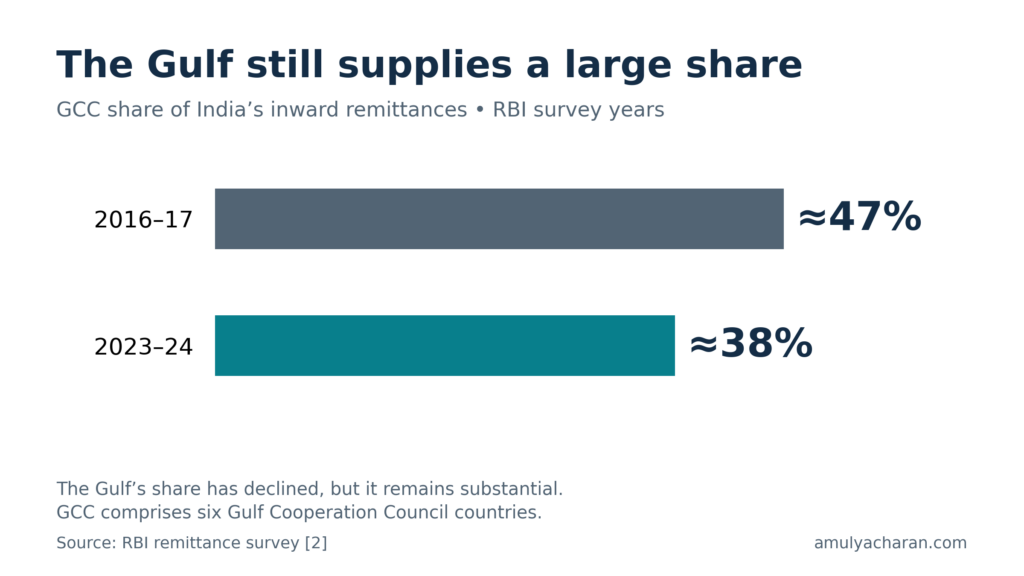
Figure 1 The Gulf remains an important source of inward remittances [2]
That broader base helps India’s external accounts withstand disruption in one region. A household has far less room to adjust. Growing transfers from professionals in America do little for a family whose only overseas earner has lost a construction job in Saudi Arabia.
The sums involved are substantial. The Economic Survey 2025–26 reported provisional private-transfer receipts of $135.4 billion for FY2024–25 and described India as the world’s largest remittance recipient. That gives us a historical benchmark. The category is broader than wages sent home, covering other transfers and certain withdrawals from non-resident deposits as well. [1]
Why transfers can rise while jobs are under pressure
The newer quarterly figures are striking. Personal-transfer receipts reached $42.9 billion in April–June 2026, against $33.2 billion a year earlier, a rise of about 29%. [5]
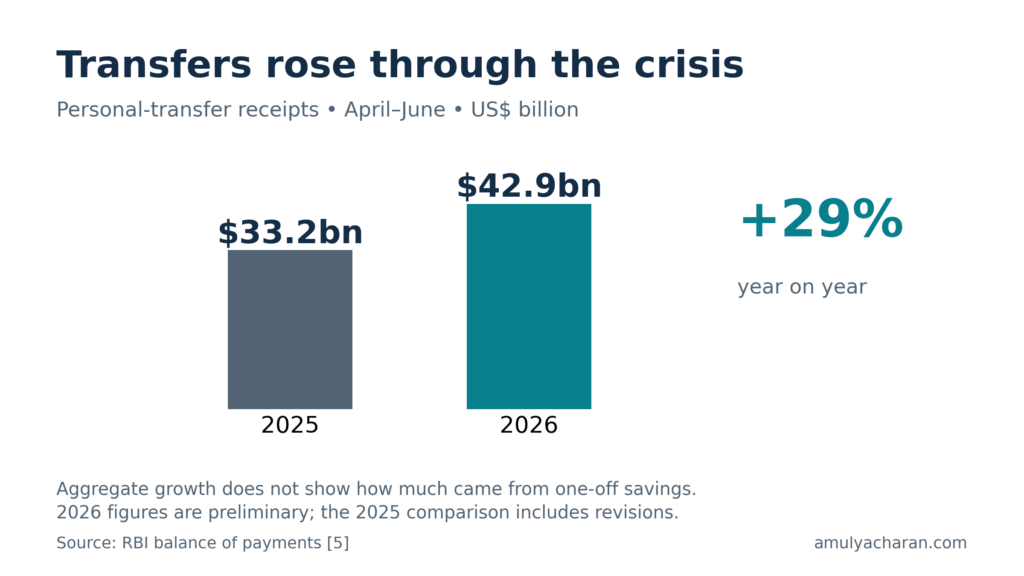
Figure 2 Personal transfers increased by about 29 percent year on year [5]
We should be careful about what we read into that increase. A worker worried about the next few months may send accumulated savings home. Someone leaving permanently may transfer a final settlement. Either payment raises today’s inflows without telling us much about next month’s wage.
A weaker rupee can also encourage transfers, since the family receives more rupees for each unit of foreign currency. That exchange-rate benefit is separate from growth in dollar-denominated inflows.
RemitSCOPE’s end-of-June assessment cited an ORF estimate of a 20–30% precautionary-transfer spike in March. It also cautioned that the India–Gulf estimates were not an official RBI corridor series. We cannot use the aggregate figures to work out how much of the increase came from Gulf wages, savings or other sources. [6]
If a substantial share came from one-off payments, some of that strength could fade. Prolonged job losses would add to the pressure. The risk deserves attention, though the available evidence cannot give us a reliable date or size for a decline.
What the inflows mean for the current account
Transfers made a useful contribution to the April–June balance of payments. The merchandise deficit widened, but higher personal transfers and services receipts helped offset it. Lower net primary-income outgo, which includes payments such as investment income, helped too. [5]
| Item in US$ billion | Apr–Jun 2025 | Apr–Jun 2026 |
| Merchandise trade deficit | 68.9 | 86.1 |
| Net services receipts | 47.9 | 51.6 |
| Personal-transfer receipts | 33.2 | 42.9 |
| Net primary-income outgo | 13.3 | 10.5 |
| Current-account deficit | 3.4 | 4.2 |
Source RBI [5]. April–June 2026 data are preliminary; the earlier comparison period includes revisions.
The increase in transfer receipts was $9.7 billion. Remove that increase and hold everything else constant, and the quarter’s current-account deficit rises from $4.2 billion to roughly $13.9 billion. This simple calculation shows their contribution; it is not a forecast of how the economy would respond to weaker transfers.
Elsewhere in the accounts, net portfolio outflows reached $9.6 billion. NRI deposit inflows slowed to $2.8 billion from $3.6 billion, while reserves declined by $8.1 billion on a balance-of-payments basis, excluding valuation effects. [5]
The deposit picture changed sharply after that. Business Standard reported on 27 September, citing RBI data, that April–July NRI deposit inflows reached $36.24 billion, compared with $4.66 billion a year earlier. Much of the increase came from FCNR(B) mobilisation following the June swap facility. These deposits help finance the external accounts, but they are distinct from the remittances families receive for everyday spending. [13]
Oil and other imports, services earnings and financial flows will all influence the national outcome. Stronger deposits can ease financing pressure even while a family is borrowing to get through a month without wages.
Who is returning and who has lost work
Return figures offer a starting point, provided we know what they count. On 23 March, Prime Minister Narendra Modi told the Lok Sabha that more than 375,000 Indians had safely returned since the conflict began. That included approximately 1,000 from Iran, among them over 700 medical students. [3]
Reuters later reported an official’s estimate of around 1.1 million returns from the region between 28 February and the end of April. Passengers, workers and other travellers were included. The figure did not measure permanent returns or jobs lost. [4]
Those distinctions matter when deciding who needs help. Someone on leave may still have a job to return to. Another worker may remain abroad while sending the family home. A terminated contract creates a different problem altogether.
Reuters’ reporting nevertheless gives reason for concern. Recruiters described fewer placements, and one worker spoke of a stalled Saudi construction project where roughly 600 Indian workers had been laid off. Such accounts tell us where employment is being disrupted. Systematic follow-up is needed to establish how widely that disruption has spread. [4]
Kerala has much at stake
Kerala’s exposure is unusually well documented. The Kerala Development Report, drawing on the Kerala Migration Survey 2023, estimated that 80.5% of the state’s emigrants were in GCC countries. It put remittances at ₹2,16,893 crore in 2023. [7]
The RBI’s separate survey found that Kerala received 19.7% of India’s inward remittances in FY2023–24, up from 10.2% in FY2020–21. That is Kerala’s share of national inflows from all sources. [2]
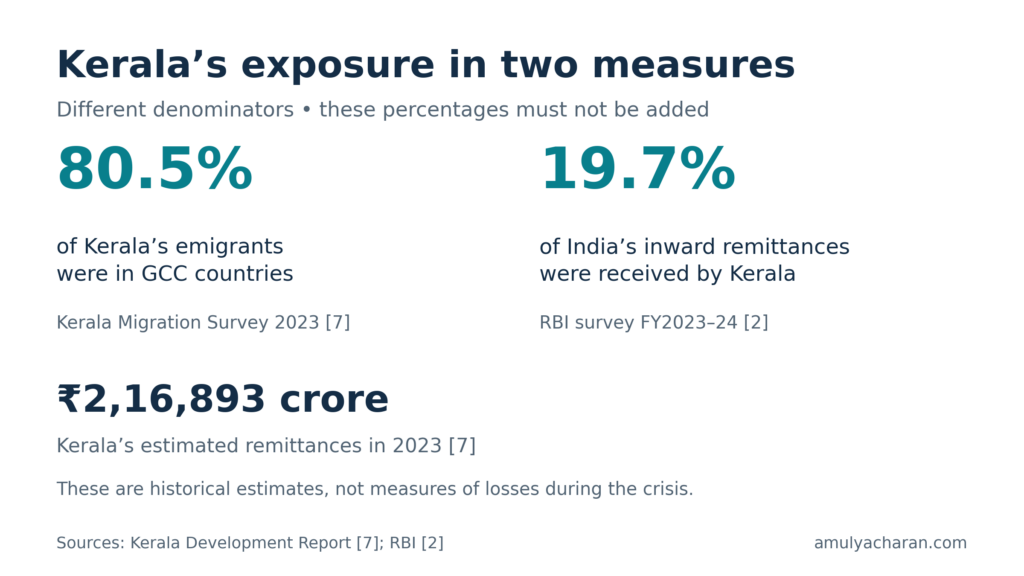
Figure 3 Kerala’s migration and remittance exposure use different measures [2, 7]
Migration researchers have warned of a possible fall of around 20% if disruption persists, and potentially more if the conflict escalates. Divya Balan also cautioned that the early evidence could not reliably quantify the impact. These are conditional assessments. [8]
For a sense of scale, a hypothetical 20% fall in Kerala’s entire 2023 remittance estimate would amount to about ₹43,400 crore. It does not establish the likely loss from the Gulf: that calculation would require the Gulf’s share of Kerala’s inflows.
The effects could travel beyond the families receiving money. A postponed house extension means less work for a builder. Reduced spending can reach shops and their employees. Kerala’s capacity to respond is already constrained: its June budget for 2026–27 projected a revenue deficit of ₹35,355 crore and a fiscal deficit of ₹56,405 crore. Those projections describe the existing fiscal position, rather than losses attributed to a remittance shock. [9]
The gaps in our picture of Bihar and Uttar Pradesh
Bihar and Uttar Pradesh received 1.3% and 3.0%, respectively, of national remittances in the RBI’s FY2023–24 survey. A small statewide share can still support a community heavily dependent on overseas wages. The state totals tell us little about that concentration. [2]
Siwan and Gopalganj have long featured in reporting on Bihar’s overseas earnings. In 2013, Business Today cited travel-agent estimates that the two districts accounted for around 70% of the state’s emigration, alongside substantial local reliance on remittances. That helps explain the historical connection. It is too old to measure today’s exposure. [10]
We need to know what families owe for recruitment, how many people each wage supports and what work a returnee can find locally. Recent household evidence would make assistance easier to target.
In Uttar Pradesh, export employment adds another difficulty. Reuters reported a Kanpur leather factory operating with about half its former workforce amid higher costs and weaker demand. One factory cannot describe the whole industry, but it shows how the crisis can also narrow job opportunities at home. [4]
When property payments become harder to meet
A home being paid for in monthly instalments can become a source of pressure when wages stop. Families may postpone construction or reconsider borrowing, with consequences for builders and suppliers. Some permanent returnees may still choose to buy near relatives, so property demand need not move uniformly.
An Equirus Wealth survey points to changing preferences among a different group, its GCC NRI customers. Nearly 40% of respondents were reducing real-estate exposure, while many were increasing allocations to equities and mutual funds. Reporting identified a customer base of about 8,300. This investor sample does not represent all Gulf workers, and the findings cannot establish the size of a decline in property purchases. [11] [12]
For a household facing an income gap, the immediate issue is whether it can meet existing payments without borrowing more than it can repay.
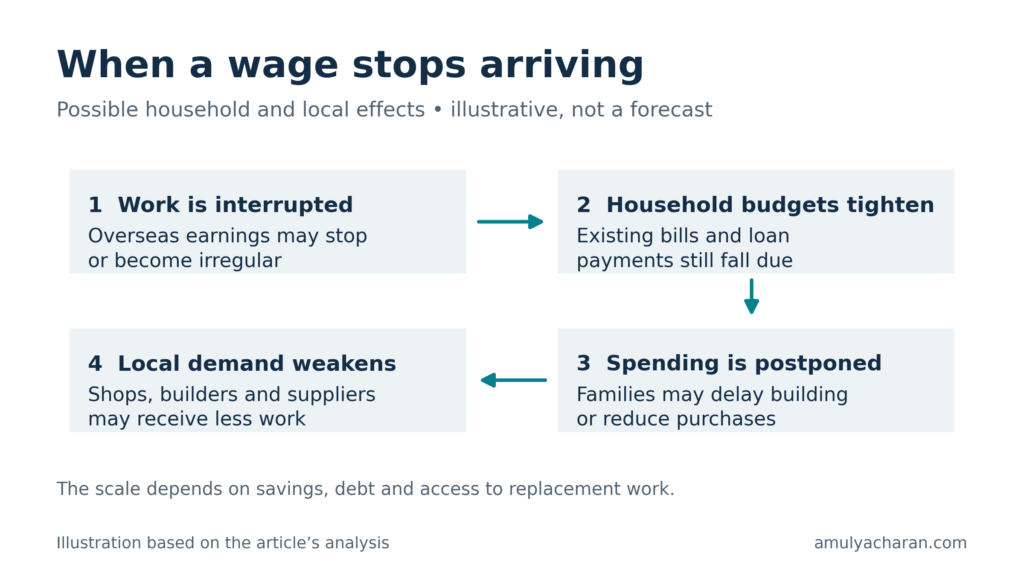
Figure 4 How interrupted earnings may affect household spending and local work
The signs worth watching
Recruitment could recover if the conflict eases durably, allowing some workers to resume employment. Continued uncertainty could keep projects and hiring on hold. Escalation would increase the risks, though dependable loss percentages or recovery dates remain beyond the available evidence.
State agencies should look beyond the next remittance total. Recruitment and deployment trends can reveal fewer opportunities; wage interruptions and returnees’ employment status can show who needs help. Household borrowing and missed payments would add evidence of financial strain. Together, these measures could bring struggling families into view earlier.
Helping workers get through the income gap
There is no need to wait for national remittances to fall before responding. Workers whose earnings have stopped already have a problem. Finding them, and helping them recover or replace that income, is a practical place to begin.
Government support needs a route back to work
Administrative return records should distinguish workers from other travellers and temporary visits from permanent returns. Follow-up should establish whether the person is still employed. State migrant agencies, recruitment data and voluntary surveys could help locate those needing support.
For someone returning without a salary, recognised skills and a connection to an employer may be more useful than encouragement to start a business. Help recovering unpaid wages or settlements also matters. Entrepreneurship programmes belong alongside placement and training, with room for workers to choose what fits their circumstances.
Kerala has programmes to build on. Its official development report records cumulative support for 8,904 ventures under NDPREM by 2024–25 and 13,906 livelihoods through Pravasi Bhadratha since 2021. The next question is how many have sustained employment and income. Participation alone cannot answer it. [7]
Other overseas destinations may offer opportunities where workers meet visa, language and qualification requirements. Recruitment to conflict-affected countries, including Israel, also needs to be assessed against current embassy guidance and applicable rules. [15] [16]
Household decisions need breathing room
An accessible reserve covering several months of essential expenses can buy time, where a family can afford to build one. New loan commitments deserve closer scrutiny when employment is uncertain. Shares and equity mutual funds may be easier to sell than property, but their value can fall just when the household needs cash.
Currency and account choices deserve care as well. NRE accounts hold rupees; FCNR(B) deposits hold permitted foreign currencies and are term deposits. Their currency exposure and access conditions differ. Anyone returning to settle in India should check residency-related account treatment with their bank. [14]
A new overseas job offer needs proper checks, even when it comes through someone familiar. Verify any recruiting agent’s active registration on eMigrate, along with the employer, contract, work visa, fees and clearance requirements. MEA also recognises direct recruitment through a foreign employer. [15]
Next month still has to be paid for
India’s strong remittance inflows give policymakers some room to prepare. That room should be used while the Gulf employment outlook remains uncertain.
For a worker with unpaid wages or a family still carrying recruitment debt, help with a settlement or a viable job can make an immediate difference. The national figures will tell us how much money arrived. Families will judge the response by whether they can get through the next month.
References
Numbered citations in the article link to the sources below. Figures retain the reporting period and category used by each source. Sources were checked for the revision dated 30 September 2026; estimates and scenarios are identified separately from official observations.
[1] Government of India, Economic Survey 2025–26, Chapter 4, External Sector. Historical FY25 private-transfer estimate and external-sector context.
https://www.indiabudget.gov.in/economicsurvey/doc/eschapter/echap04.pdf
[2] Reserve Bank of India, Changing Dynamics of India’s Remittances — Insights from the Sixth Round of India’s Remittances Survey, 19 March 2025. FY2023–24 source-country and recipient-state shares. An RBI staff research article.
https://www.rbi.org.in/scripts/BS_ViewBulletin.aspx?Id=23260
[3] Prime Minister’s Office, PM addresses the Lok Sabha on the ongoing conflict in West Asia, 23 March 2026. Safe-return totals and the Iran evacuation figures.
[4] Reuters, India’s job engine strains as Iran war hits remittances and trade, 22 May 2026, reproduced by The Economic Times. Returnee-count limitations, recruiter interviews and the Kanpur factory case.
[5] Reserve Bank of India, Developments in India’s Balance of Payments during the First Quarter April–June of 2026–27, 1 September 2026. Preliminary quarterly data; comparison-period figures include revisions.
https://www.rbi.org.in/Scripts/BS_PressReleaseDisplay.aspx?prid=63493
[6] RemitSCOPE, Middle East Crisis and Remittances — End-of-June Strategic Update. Gulf exposure estimates, precautionary-transfer hypothesis and limits of corridor-level data.
[7] Kerala State Planning Board, Kerala Development Report 2026, Chapter 23. Kerala Migration Survey 2023 estimates and returnee-support programmes.
https://spb.kerala.gov.in/wp-content/uploads/2026/01/kerala-development-report_2026.pdf
[8] The Hindu, Kerala likely to see 20% drop in remittances as West Asia war drags on, reproduced by FLAME University. Conditional assessments by migration researchers; not an observed decline.
[9] PRS Legislative Research, Kerala Budget Analysis 2026–27. Analysis of the budget presented on 19 June 2026; revenue and fiscal deficits.
[10] Business Today, Bihar emerges as new hub for West Asia remittances, 10 January 2013, print edition 20 January. Historical reporting and local estimates for Siwan and Gopalganj.
[11] Equirus Wealth, From Real Estate to Financial Assets — The Structural Shift in GCC NRI Portfolios; and survey coverage in The Economic Times, 6 May 2026. Investor allocation findings and customer-sample context.
[12] The Economic Times, Gulf NRIs are dumping real estate, and betting big on India’s stock market, 6 May 2026. Identifies the Equirus customer base surveyed in April.
[13] Business Standard, NRI deposit flows surge over 6x to $36.2 bn in Apr–Jul FY27 — RBI data, 27 September 2026. Subsequent deposit inflows and FCNR(B) mobilisation.
[14] Reserve Bank of India, Accounts in India by Non-residents, frequently asked questions. Currency denomination, permitted account types and residency treatment.
https://www.rbi.org.in/scripts/FAQView.aspx?Id=52
[15] Ministry of External Affairs, FAQ on Issues of Intending Emigrants. Registered recruiting agents, direct recruitment and emigration safeguards.
https://www.mea.gov.in/issues-of-intending-emigrants.htm
[16] Akashvani News, India issues an advisory urging Indian nationals in Israel to exercise utmost caution, 28 February 2026. Conflict-related safety guidance; travellers must check the latest embassy advice.