Carbon Credits in India and the Road from Rules to Real Returns
By Amulya Charan | Blog 83 | Updated 10 November 2026
Can an Indian factory earn money by cutting its emissions? Can a farmer be paid for practices that store more carbon? And can a company buy carbon credits and then claim that its climate problem has been solved? These questions are often bundled together. They deserve different answers.
India now has a national framework for carbon-credit trading. The Energy Conservation (Amendment) Act, 2022 provided the legal foundation, and the government notified the Carbon Credit Trading Scheme, or CCTS, on 28 June 2023. A December 2023 amendment added the offset mechanism. Describing India as having no national framework is therefore incorrect. [1–3]
The harder question is how well that framework translates into credible emissions reductions, dependable payments and participation beyond large companies. Rules establish a market’s foundations. Its usefulness depends on the quality of the credits and the experience of the people trying to earn or buy them.
For India, the opportunity is worth pursuing. But we should be careful about presenting carbon credits as easy income, a guaranteed export business or a substitute for reducing emissions at source.
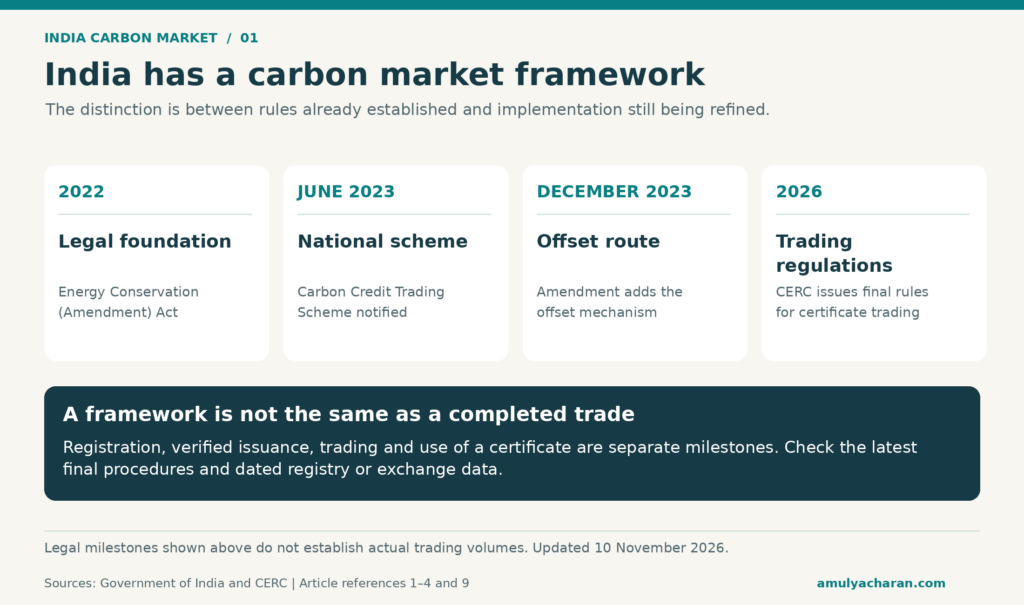
Figure 1. The national framework exists; operating progress must be assessed separately.
First understand what is being bought
A carbon credit generally represents one tonne of carbon dioxide equivalent, written as tCO2e, reduced or removed under a recognised crediting system. Carbon dioxide equivalent brings different greenhouse gases into a common unit. India’s CCTS certificates are denominated in this way. [4]
An emissions allowance is different: it authorises emissions within an emissions trading system. A project credit recognises a quantified reduction or removal against a defined baseline. Calling every carbon credit a permit to pollute blurs that distinction. [4]
Consider a project that captures methane from a landfill. Its creditable benefit depends on what emissions would otherwise have occurred, what the project actually achieves and what the applicable methodology allows. A claim that a project is environmentally useful does not, by itself, establish how many credits it can issue. [5]
It also helps to separate issuance, trading and retirement. Issuance creates the recognised unit after the required checks. Trading changes ownership. Retirement takes a credit out of circulation for use against a claim. A credit may change hands more than once before retirement. Those activities cannot be added together as if they all represented fresh emissions reductions. [14]
The framework exists and has moved forward
The 2022 amendment empowered the Central Government to specify a carbon-credit trading scheme and inserted section 14AA on issuing carbon-credit certificates. The 2023 scheme then established the institutional structure. BEE is the administrator, Grid Controller of India is the registry, and the Central Electricity Regulatory Commission, or CERC, regulates trading. A national steering committee provides oversight. [1, 3, 6]
Implementation has also advanced. In March 2025, the government announced approval of the detailed offset procedure and eight methodologies. These included routes for specified renewable-energy activities, green hydrogen, industrial energy efficiency, landfill methane recovery and mangrove afforestation and reforestation. This was an initial approved set, not a permanent limit on what could subsequently be added. [7]
In January 2026, the government reported that notified greenhouse-gas emission-intensity targets covered 490 obligated entities. This comprised 282 entities covered by the October 2025 notification and another 208 brought in through the January 2026 notification. The coverage included aluminium, cement, chlor-alkali, pulp and paper, petroleum refineries, petrochemicals and textiles. These are dated coverage figures, not a count of the entire Indian industrial economy. [8]
Expansion also needs to be described accurately. A revised draft published in mid-2026 proposed targets for 255 iron and steel units. A proposed schedule should not be added to the count of entities under final notified targets merely because it has appeared for consultation. [15]
CERC’s final regulations for the purchase and sale of carbon-credit certificates followed in 2026. They provide for separate compliance and offset market segments and exchange-based dealing unless CERC specifically permits another mode. [9]
These milestones matter. They establish that India has moved beyond merely discussing a carbon market. They do not, on their own, tell us the volume of certificates actually issued, traded or surrendered. Those claims need dated registry and exchange data.
BEE’s current carbon-market page also lists a consultation on a draft transaction procedure for the compliance mechanism, alongside consultations on aspects of the offset mechanism. This is where the distinction becomes practical: the framework exists, while parts of its operating procedures continue to be developed or refined. Participants need the latest final documents for their own route. [4]
Two routes with different obligations
Under the compliance mechanism, designated industrial entities must meet their notified greenhouse-gas emission-intensity targets. An entity that performs better than its target can become eligible for certificates; an entity that falls short must meet the resulting certificate obligation under the applicable rules. The targets and verification requirements determine the outcome. [3, 6]
The word intensity is crucial. It means emissions per unit of output. It does not mean a fixed ceiling on a factory’s total annual emissions.
Take a simplified illustration. A factory produces 100,000 tonnes of a product. Its target is 0.80 tonnes of CO2 equivalent per tonne of output, while its verified performance is 0.75. The difference is 0.05 tonnes per tonne of output, or 5,000 tonnes in total. That illustrates how outperformance is related to production. Actual certificate issuance must follow the official calculation, boundaries and verification procedure.
The same factory could improve its intensity while increasing total emissions if production expands sufficiently. Both numbers deserve attention. An intensity market can reward cleaner production without automatically ensuring that absolute emissions fall.
The offset mechanism offers a voluntary project route for entities outside the compliance obligation. Projects must satisfy an applicable approved methodology and the required registration, monitoring and verification process. Joining voluntarily does not make the evidence optional. [5]
Nor should a project developer assume that an offset certificate can automatically be sold into the industrial compliance segment. CERC provides separate segments. Eligibility for a particular use must be checked against the rules and approvals in force. [9]
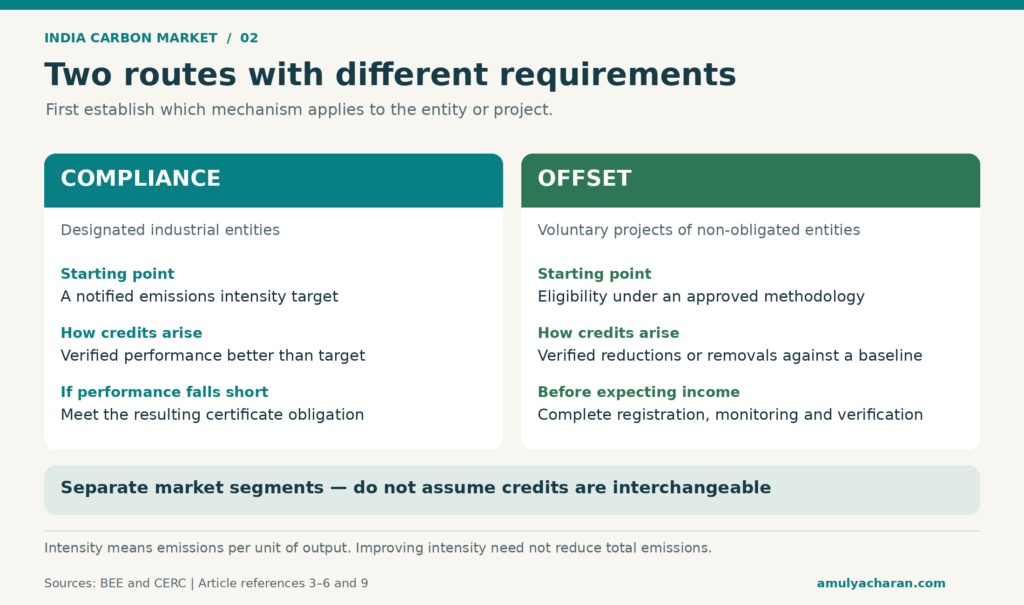
Figure 2. The compliance and offset routes have different entry requirements and uses.
Where the opportunity is most practical
For an industrial company, the sensible starting point is its own operations: fuel use, electricity consumption, process emissions and the cost of improving them. A project that lowers energy bills can offer an operating return. Carbon revenue may improve that return where the relevant crediting rules are satisfied.
This order matters. If a project makes financial sense only because someone has assumed a high future credit price, it needs much closer scrutiny. Management should examine the cost of compliance, the expected timing of issuance and the possibility of receiving fewer certificates than anticipated.
There is also an opportunity in the services needed to make a market trustworthy. Metering, emissions accounting, project design and independent verification all require capability. India should build that capability across industrial clusters, so that smaller businesses can obtain competent support at a reasonable cost.
For waste managers and developers of eligible climate projects, an approved methodology provides a possible route to additional income. It is still necessary to establish project eligibility before committing expenditure. A technology appearing in a broad sector list is not the same as a particular project qualifying for credits.
For farmers and community organisations, the first question should be practical: what must change on the ground, for how long, and who will pay for it? Carbon income is useful only if the participant understands the obligations and retains a fair share of the proceeds.
The income calculation needs all the costs
There is no single price for a carbon credit across the world. Prices depend on the scheme, project type, buyer’s intended use and perceived quality. The World Bank’s 2026 report found that overall credit issuance rose by 8 per cent in 2025, while credit prices softened slightly across project types and some categories retained premiums. More issuance does not automatically mean better earnings for every seller. [10]
We must also avoid confusing government carbon-pricing revenue with developers’ credit sales. The World Bank reported more than US$107 billion in public revenue from carbon pricing in 2025. That is a different measure from the value of voluntary carbon-credit transactions or income received by Indian projects. [10]
A simple hypothetical calculation makes the business issue clearer. Suppose 1,000 verified credits sell for ₹800 each. Gross receipts are ₹8 lakh. If project documentation, monitoring, verification, fees and the developer’s or aggregator’s charges total ₹3 lakh, ₹5 lakh remains before project operating costs, financing costs and tax. This is an illustration, not a market quotation or a promised return.
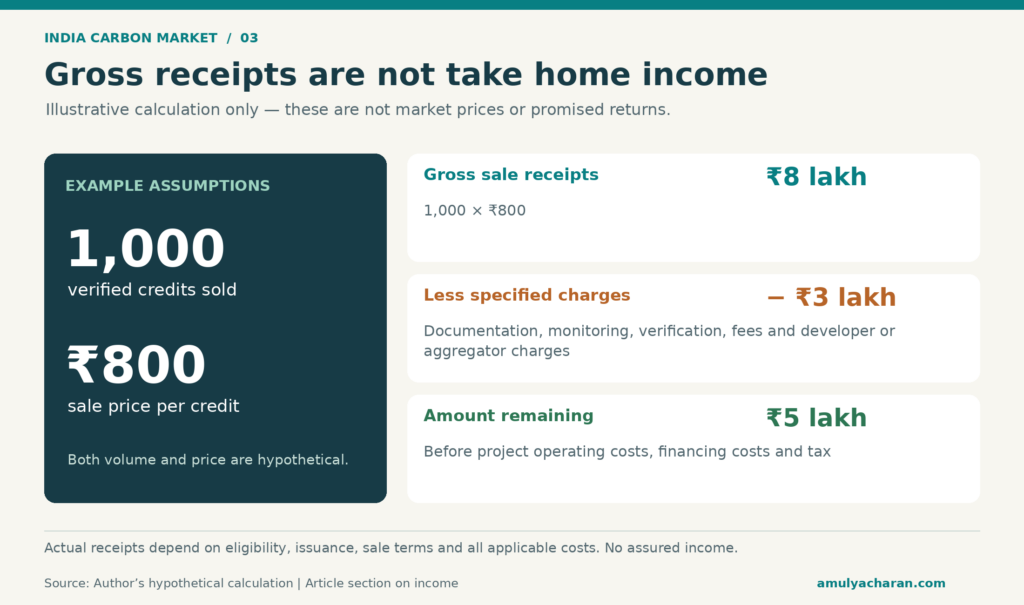
Figure 3. An illustrative net income calculation after specified charges.
A useful proposal should therefore show expected net receipts, the payment schedule and the downside case. What happens if issuance is delayed? If fewer credits qualify? If the buyer does not purchase the expected volume? These questions belong in the initial appraisal.
Quality begins with the evidence
For project credits, a credible assessment asks whether the climate benefit is additional: would it have happened anyway without the incentive from carbon revenue? It also tests whether the baseline is realistic and whether reductions have been quantified conservatively. [11]
Some activities store carbon that can later be released. Fires, land-use changes or project failure can reverse the benefit. Such risks need an appropriate response. Projects must also address leakage, where an activity shifts emissions elsewhere, and prevent the same benefit being issued or used twice. [5, 11]
The Integrity Council for the Voluntary Carbon Market identifies independent verification, tracking, transparency, additionality, permanence and safeguards among its Core Carbon Principles. These are useful international benchmarks for project-credit quality. They are not a replacement for Indian law or proof that every credit from a recognised programme has equal quality. [11]
Buyers need care in how they describe their purchases too. Paying for verified mitigation can support climate action. It does not establish that the buyer’s own factory, product or supply chain has stopped emitting. The public claim should explain what was purchased and how it is being used.
Small participants need understandable contracts
The people expected to deliver a project may understand its paperwork least well. A farmer may be asked to sign a long agreement about soil practices, monitoring access and rights over future credits. A small manufacturer may be offered a consultancy package without a clear account of the likely net return.
That is where participation can become unfair, even when the larger policy intention is sound. My recommendation is a short explanation in the participant’s own language, attached to the full agreement. It should set out the work required, contract period, costs, revenue share, payment conditions and grievance contact.
The agreement should also explain who owns the credits, who may sell them, what evidence of the sale will be shared and who bears the risk of rejection or reversal. A farmer should understand what happens if land is sold or a practice cannot be continued. An enterprise should know how it can exit an arrangement and what that would cost.
Aggregation may help spread the cost of documentation and verification across many small projects, where the applicable rules allow it. But an aggregator’s role should be transparent. Participants need a clear statement of deductions and their resulting payment. Local institutions can help explain contracts; they should avoid presenting uncertain carbon income as an assured benefit.
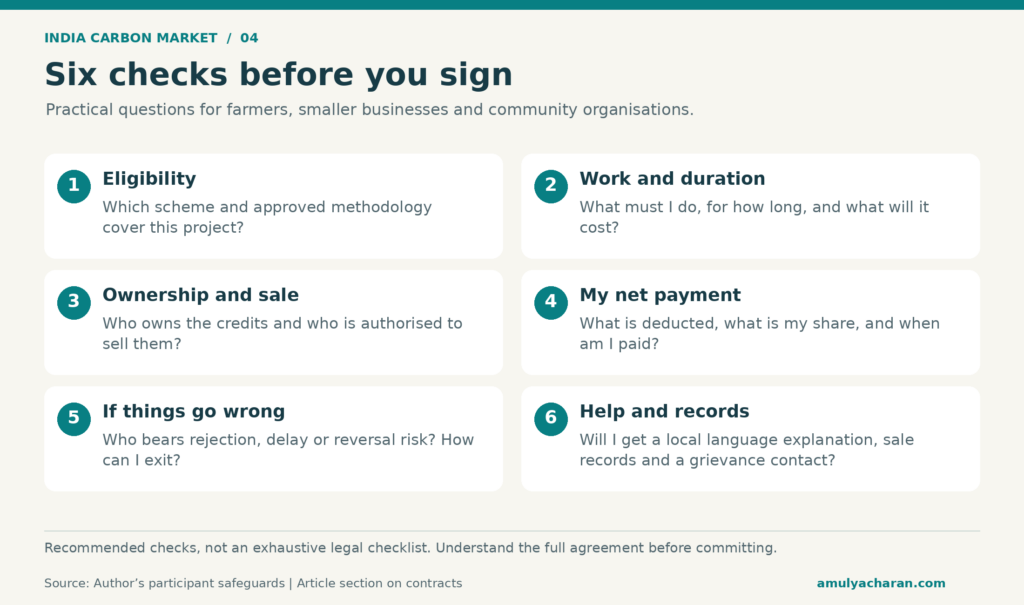
Figure 4. Practical contract checks for smaller participants.
Overseas demand needs a separate assessment
Domestic CCTS certificates, credits under independent voluntary standards and international transfers under Article 6 of the Paris Agreement are distinct routes. Acceptance in one does not guarantee acceptance in another.
For authorised international mitigation transfers under Article 6, the accounting rules require corresponding adjustments to avoid double counting between countries. Put simply, the exporting and acquiring countries must account for the transfer consistently. Host-country authorisation and the buyer’s intended use therefore matter. [12]
This does not mean that every voluntary credit purchase from abroad automatically requires an identical Article 6 process. UN climate guidance distinguishes authorised units from non-authorised mitigation-contribution units. The relevant route and claim must be established before promising an overseas sale. [13]
India should assess such transfers carefully. Earning foreign exchange is attractive, but the value of mitigation also depends on its contribution to domestic climate commitments. Project developers need specific eligibility and authorisation checks, rather than a general assumption that Indian credits can be exported wherever prices are highest.
What should happen next
The government’s priority should be to make implementation easier to follow. A single public dashboard should distinguish notified targets, registered projects, issued certificates, completed trades and certificates used for compliance or retired. Each number needs a date and a clear definition.
BEE and the other responsible institutions should keep approved procedures, amendments and consultations clearly separated. A draft methodology should never look like an available entitlement. Applicants need realistic processing timelines and an accessible route for resolving queries.
The next priority is competent verification at workable cost. Training, oversight and transparent performance standards for verification agencies would help build confidence. Smaller participants would benefit from shared technical assistance through industrial associations, farmer organisations and suitable local institutions.
Companies should prepare their emissions records and examine practical reduction opportunities now. Project developers should establish eligibility and credible buyer interest before selling a revenue forecast. Buyers should ask what a credit represents, how it was verified and whether it is suitable for the intended claim.
India has a framework. The task now is to make participation dependable and the climate benefit demonstrable. A good carbon market should help pay for cleaner production and credible mitigation, while giving the people doing the work a fair and understandable return. That is the test by which this opportunity deserves to be judged.
References
Numbered references correspond to citations in the article. Official notifications and procedures govern eligibility; proposals and consultations should be read separately from final rules.
[1] Energy Conservation Amendment Act 2022
Government of India. Act 19 of 2022; see provisions adding section 14(w) and section 14AA. Read source
[2] Commencement of the 2022 amendment
Ministry of Power, PIB, 9 February 2023. Confirms commencement on 1 January 2023. Read source
[3] Indian Carbon Market
MoEFCC, parliamentary reply, PIB, 9 December 2024. Records S.O. 2825(E), 28 June 2023; S.O. 5369(E), 19 December 2023; and the two mechanisms. Read source
[4] Carbon Market overview and current documents
Bureau of Energy Efficiency. Institutional framework, certificate unit, procedures and current consultations. Accessed 10 November 2026. Read source
[5] Detailed Procedure for Offset Mechanism under CCTS
BEE, Version 1.0, 2025. Registration, project standard, validation, verification and issuance requirements. Check subsequent amendments before applying. Read source
[6] Framework for Carbon Credit Trading Scheme
Ministry of Power, PIB, 4 December 2025. Institutions, compliance mechanism and offset mechanism. Read source
[7] Turning Climate Commitments into Action
Ministry of Power, PIB, 28 March 2025. Approval of offset procedure and initial eight methodologies. Read source
[8] Greenhouse Gas Emission Intensity Targets for 208 more industries
MoEFCC, PIB, 22 January 2026. Describes January 2026 expansion and the resulting 490 obligated entities. Read source
[9] Purchase and Sale of Carbon Credit Certificates Regulations 2026
CERC. Final notification dated 27 February 2026; CERC regulations index lists Gazette date 27 April 2026. See particularly regulations 5, 6 and 9. Read source
[10] State and Trends of Carbon Pricing 2026
World Bank, 19 May 2026. Global pricing revenue, credit issuance and price trends. Read source
[11] The Core Carbon Principles
Integrity Council for the Voluntary Carbon Market. International voluntary-market quality benchmarks. Accessed 10 November 2026. Read source
[12] Article 6 Reference Manual
UNFCCC. Article 6.2 guidance, including authorisation and corresponding adjustments. Read source
[13] Article 6 units and accounting distinctions
UNFCCC technical presentation. Distinguishes authorised Article 6 units and non-authorised mitigation-contribution units. Read source
[14] Carbon credit concepts and retirement
United Nations DESA, technical paper on carbon credits and their tax treatment. Explains carbon-credit terminology and retirement. Read source
[15] Revised draft targets for iron and steel
The Indian Express, 5 July 2026. Reports the June 2026 revised draft covering 255 units, separately from final targets for 490 entities. Read source