How Long India Can Manage With Its Oil and LPG Reserves
By Amulya Charan | Blog 134 | Revised 9 November 2026
A household waiting for a cooking-gas cylinder does not need a lesson in barrels and underground caverns. It needs a straightforward answer: if imports are interrupted, how long can normal life continue? The same question matters to the farmer buying diesel and the small business arranging deliveries.
India’s public disclosures do not yet give us one clean, current answer for crude oil and a separate one for LPG. They give us dated stock figures, broader supply assurances and storage capacities. Putting them in the same basket makes the position look clearer than it is.
The position in plain language
| Question | What the evidence supports |
| Crude oil in the strategic caverns | About 4½ days of normal refinery use, using the 3.372 million tonnes disclosed in March 2026. This is only the dedicated cavern stock. [1, 2] |
| All crude stocks across India today | A May statement reported 60 days of crude cover, but did not provide a physical inventory reconciliation or denominator. It is not a verified November stock count. [3] |
| LPG physically stored across India today | Not established by a current, reconciled public figure in the sources cited. The government reported 45 days of LPG rolling stock in May; this cannot safely be called 45 days sitting in Indian tanks. [3] |
| What I recommend | An audited national oil buffer measured against the IEA 90-day net-import benchmark, supported by a protected 30-day crude reserve and a separate 30-day LPG reserve. The 30-day figures are my policy proposal. [5] |
The proposed protected reserves would require roughly Rs 1.5–3 lakh crore in storage and fuel under the assumptions set out below, with a base illustration close to Rs 2 lakh crore. This is a phased national investment estimate, not an approved government programme. Major new facilities could take the main delivery window into 2031–34, if decisions and financing begin promptly.
That does not mean India will run out of fuel after four or five days. Domestic production, commercial stocks and continuing imports also support supply. Nor does an emergency reserve guarantee unchanged prices or immediate cylinder delivery everywhere. Location, transport and release decisions matter.
First understand what is actually available
Crude oil is the raw material that refineries turn into fuels. LPG is the cooking gas supplied through cylinders and bulk systems. A crude stockpile is therefore not a substitute for a properly stocked LPG system.
For crude, the most specific physical strategic-stock disclosure cited here is the parliamentary reply of 23 March 2026: 3.372 million tonnes stored against 5.33 million tonnes of cavern capacity. At a rounded normal refinery-use rate of 750,000 tonnes a day, that inventory represents about 4½ days. Completely filling the existing caverns would raise it to about seven days. [1, 2]
This calculation uses crude processed by refineries, rather than total demand for finished oil products. It avoids the earlier confusion over converting tonnes to barrels and then dividing by a different measure of consumption. Normal refinery use includes production for export; it is not a prediction of the minimum crude India would need if exports or domestic demand were curtailed.
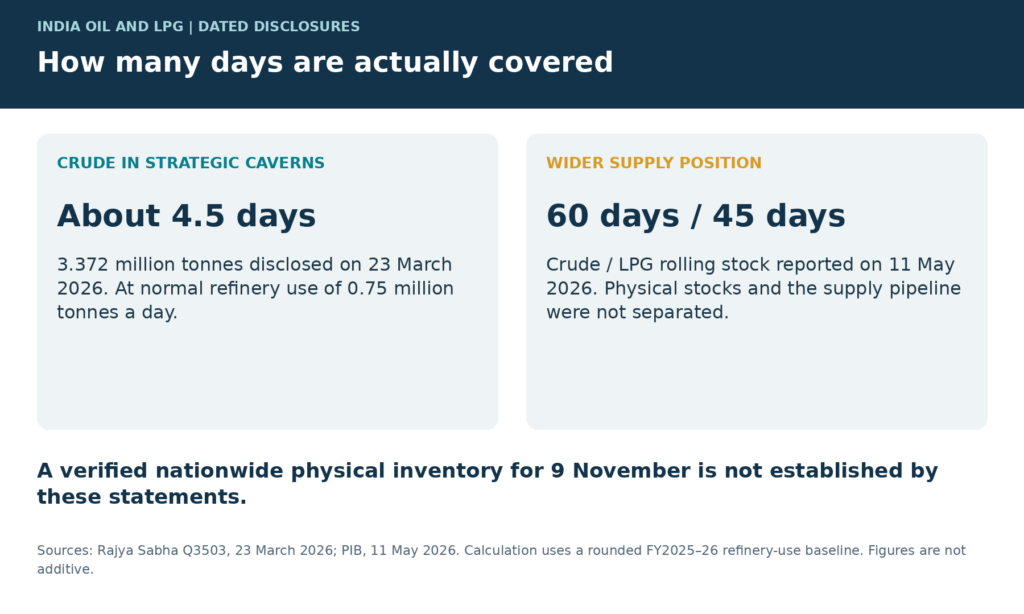
Figure 1. The specific cavern inventory and the wider supply statements describe different things. Each observation keeps its reporting date.
There is a wider cushion. On 26 March, the Petroleum Ministry reported around 60 days of actual stock cover across crude, products and strategic storage. It separately described 74 days of storage capacity. On 11 May, the government reported 60 days of crude and 45 days of LPG rolling stock. These statements have different scope; none should be added to the cavern figure. [3, 4]
For LPG, the distinction is especially important. A cargo booked abroad, a ship approaching port and gas already held at a bottling plant all improve supply security. They do not give the same protection if shipping stops. India needs to publish those categories separately. A more precise November physical-stock answer would require that reconciliation; repeating a dated assurance would conceal the gap.
What international good practice actually requires
India is listed by the IEA as an association country. We should use the benchmark as a policy guide without describing it as an identical membership obligation already binding India. [6]
The International Energy Agency’s recognised oil-security benchmark is at least 90 days of net oil imports for its net-importing members. Net imports mean imports after exports are taken into account. The benchmark allows qualifying crude and refined-product stocks, held by government, agencies or industry. It does not require every barrel to be in a government cavern. [5]
We also cannot subtract the government’s reported 60 days from the IEA’s 90 and conclude that India needs exactly 30 more days. The stock categories and the denominator must match first. That apparently simple subtraction was one of the main sources of confusion in this debate.
To give a sense of scale, the FY2025–26 trade figures in the PNGRB bulletin show about 230.8 million tonnes of net petroleum imports on a simple mass basis. Ninety days of that flow is roughly 57 million tonnes. This is a screening estimate of the size of a national oil cushion, not an IEA-compliant stock calculation: the IEA methodology requires the appropriate product conversions, eligibility rules and deductions. [2, 5]
How much more India needs for that national benchmark cannot be stated responsibly until present qualifying stocks have been audited on the same basis. Nor can the exact infrastructure bill for national compliance be obtained simply from cavern capacity. Some commercial stocks and facilities can count. Others are unavailable, already committed, or essential to routine operations.
LPG deserves a benchmark of its own
There is no separate universal rule saying every country must hold 90 days of domestic LPG consumption. Japan offers a useful model for an import-dependent economy: its stated LPG targets are 50 days of imports in national stockpiles and 40 days in private stockpiles. That combination is 90 days of imports, with responsibilities divided clearly. [7]
At an illustrative Indian LPG import dependence of 60%, that model would equal about 54 days of total consumption. It would comprise roughly 30 consumption-days of protected public stocks and 24 consumption-days of industry stocks. The conversion changes if import dependence changes. It is an adaptation of Japan’s model, not a global legal requirement.
My recommendation is to build the protected 30-day component while auditing and strengthening the commercial layer. The government has already directed oil companies to plan for at least 30 days of national LPG consumption in stocks. That direction is evidence of intent, rather than proof that a protected reserve has been filled. [8]
How much more space should India secure
A practical first programme should have a measurable goal: protected crude stocks equal to 30 days of normal refinery use, and protected LPG stocks equal to 30 days of normal consumption, above the inventories needed to run the everyday system. This is my recommended reserve design. It does not by itself certify national compliance with the IEA benchmark.
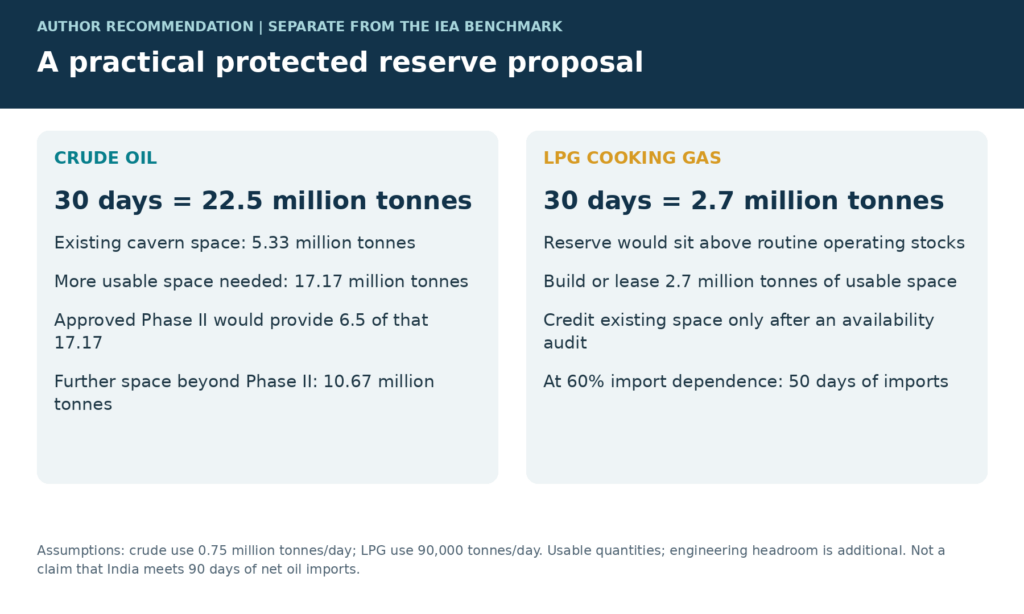
Figure 2. Proposed usable reserve volumes and the crude capacity gap. Phase II is included within the additional requirement, not added a second time.
For crude, the target is 22.5 million tonnes, or 225 lakh tonnes. Deduct the existing 5.33 million tonnes of space and the additional requirement is 17.17 million tonnes. The approved 6.5-million-tonne Phase II programme would meet part of that need, leaving another 10.67 million tonnes to build or secure under dependable storage contracts. All quantities assume emergency access rights over the credited capacity. [1, 9]
The oil to fill that system is a separate purchase. Against the March inventory of 3.372 million tonnes, reaching 22.5 million tonnes would require another 19.128 million tonnes of crude. An updated stock audit would alter that purchasing requirement.
For LPG, the protected reserve target is 2.7 million tonnes, or 27 lakh tonnes, using 90,000 tonnes a day as the rounded normal-consumption baseline. Until existing surplus, usable and uncommitted capacity is established, I would budget conservatively for the full 2.7 million tonnes of additional protected space and fuel. This is not a claim that India currently has no LPG storage. Verified capacity that can be dedicated without weakening routine supply should reduce the new-build requirement.
These are usable reserve volumes. Engineering design must allow for safe filling limits, non-withdrawable material, maintenance and seasonal peaks. A terminal that handles a million tonnes a year does not necessarily store a million tonnes at one time.
How much investment would that require
The bill has two large parts: space and the fuel inside it. Announcing a construction budget while leaving filling unfunded gives the country an impressive facility with incomplete protection.
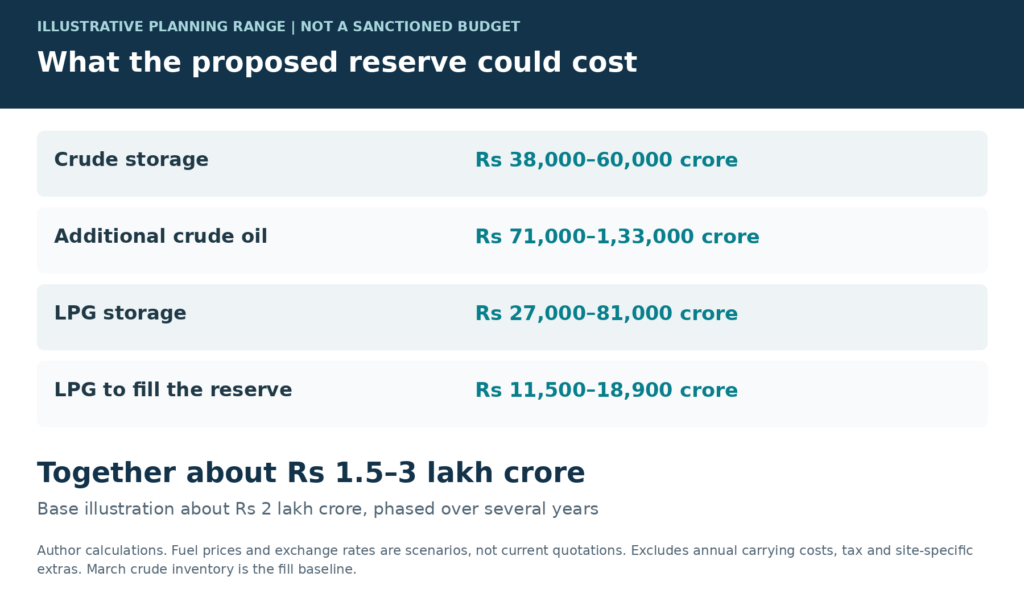
Figure 3. Planning costs for the proposed protected reserves. The figures do not price the additional national gap against the IEA benchmark, which needs a stock audit first.
For crude storage, the reported Phase II project cost of Rs 14,527 crore for 6.5 million tonnes implies about Rs 2,235 crore per million tonnes. Applying that unit cost to 17.17 million tonnes gives roughly Rs 38,000 crore. Allowing a higher planning rate of Rs 3,500 crore per million tonnes raises it to about Rs 60,000 crore. The upper rate is an analytical allowance, not a tender quotation. Phase II is already inside this estimate. [10]
For LPG storage, I use a deliberately broad Rs 10,000–30,000 crore per million tonnes of usable space. Older parliamentary project examples show why costs vary: an 80,000-tonne Mangaluru augmentation was listed at Rs 800 crore, while terminal projects with jetties and other facilities were appreciably more expensive per tonne of static storage. These historical packages are only cost anchors; they are not interchangeable engineering designs or current prices. The resulting LPG space estimate is Rs 27,000–81,000 crore. [11]
The fuel estimate assumes crude at US$60–95 per barrel, LPG at US$500–700 per tonne and an exchange rate of Rs 85–100 per dollar. These are sensitivity assumptions, not today’s quotations or forecasts. They put additional crude at roughly Rs 71,000–1,33,000 crore and LPG at Rs 11,500–18,900 crore. [12]
Together, the proposal is approximately Rs 1.5–3 lakh crore. At US$70 crude, US$600 LPG and Rs 90 per dollar, using the lower crude construction rate and a middle LPG storage rate, the illustration is about Rs 2 lakh crore. Tax, financing during construction, escalation and site-specific network or land costs require separate appraisal. Leasing replaces part of upfront construction with recurring charges; it does not remove the cost of security.
How quickly could the protection be delivered
Some gains should arrive well before new caverns. Auditing rights, filling genuinely available space and contracting suitable third-party storage could improve protection within a year. That is a proposed objective, dependent on facilities and fuel being available at workable prices.
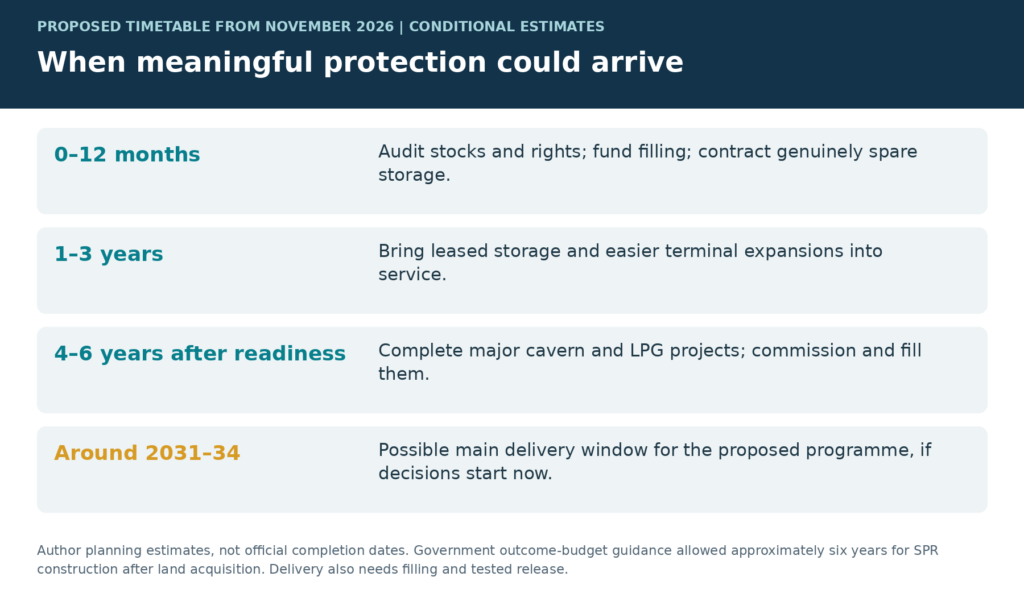
Figure 4. Conditional delivery sequence. These are recommended planning windows, not government promises or verified project completion dates.
For larger construction, patience is unavoidable. The government’s 2022–23 outcome budget allowed approximately six years for SPR construction after land acquisition. A planning allowance of four to six years after land, approvals, financing and contracts are ready is therefore more credible than a promise of completion in a year or two. Filling and release testing must follow. [13]
The LPG experience also cautions against haste in public promises. The 80,000-tonne Mangaluru cavern project was reported to have begun construction in 2019 and passed acceptance testing in 2025. One project is not a universal timetable, but it demonstrates that complex underground storage is a multiyear undertaking. [14]
If India starts the remaining decisions promptly, a main delivery window around 2031–34 is a reasonable planning scenario for the proposed programme. It is not an official schedule. Brownfield terminal additions may arrive earlier; difficult land, geology or marine connections can take longer. A programme of this size would require several projects proceeding together, rather than one facility after another.
Overseas stocks can provide another layer if India has enforceable release rights and reliable transport. They should be geographically diversified. Fuel held beyond a shipping route that is itself disrupted offers less immediate help than fuel already within reach of Indian users. Ordinary purchase contracts promise future supply; they are not automatically reserve stocks.
Are we reasonably geared for the task
India has the institutions and an operating storage network to build on. It would be unfair to suggest that work has not begun. But the evidence does not yet justify saying that the proposed level of protection is fully funded, stocked and on a dependable national delivery schedule.
The August 2026 report on the parliamentary committee review recorded 400 acres acquired at Chandikhol, with the request for proposal under review. Padur II’s concession agreement had been signed on 1 October 2025, while conditions precedent were still being completed. Those are meaningful steps. They are also steps short of commissioned, filled reserves. Bikaner, Bina and a possible Mangaluru expansion must retain their respective planning status. [15]
The most useful government announcement now would be a delivery account with dates and responsibilities. For each project, show land readiness, financial closure, construction progress, commissioning, filling and the quantity that can actually be released. Report infrastructure spending separately from fuel procurement. A public-private arrangement can share the burden, but its emergency access rights must be clear.
What the Centre and states should do next
The Centre should first commission a common stock account covering crude and LPG separately. Publish a monthly physical-inventory total, its observation date, days of normal use and days of net imports. Put contracted cargoes in a separate column. Security-sensitive site details need not be published to explain the national position.
Next, fund an agreed minimum stock floor. Fill or contract available space while procurement for new facilities proceeds. Set rules for release and replenishment before a crisis. For oil companies, minimum commercial-stock obligations should identify which inventory remains available for emergency use and who pays for carrying it.
States should resolve land and connectivity decisions on a joint timetable with the Centre. They should also map bottling, road and rail constraints, and arrangements for hospitals, schools, community kitchens and small businesses. Storage at a port is only part of the answer when cylinders have to reach an inland district.
Engineering and safety scrutiny must remain part of delivery. LPG facilities need suitable technology, site-specific assessment, emergency response arrangements and trained operators. Faster coordination can save time; treating every site as interchangeable will not.
Finally, run release exercises. Can the oil reach an operating refinery? Can LPG reach bottling plants if a terminal or transport link is unavailable? Can essential users obtain supplies through a process they understand? Those tests turn inventory into dependable public protection.
For an Indian reader, the useful promise is simple: a published stock position, a funded reserve target and a date by which the protection will actually exist. We should ask for all three, while recognising that crude oil and cooking gas require separate answers.
Calculation notes
All estimates are the author’s analysis. They use rounded normal-use baselines, not rationed or crisis-depressed demand. One million tonnes equals 10 lakh tonnes; one lakh crore equals 100,000 crore. Inventory observations retain their dates.
| Item | Calculation and interpretation |
| Normal crude use | FY2025–26 refinery throughput: 272.110 million tonnes ÷ 365 = about 745,500 tonnes/day. Rounded planning baseline: 750,000 tonnes/day. [2] |
| Normal LPG use | FY2025–26 LPG consumption: 33.212 million tonnes ÷ 365 = about 91,000 tonnes/day. Rounded planning baseline: 90,000 tonnes/day. [2] |
| Cavern cover | 3.372 ÷ 0.75 = 4.50 days. Full existing capacity: 5.33 ÷ 0.75 = 7.11 days. A newer inventory would change actual cover. [1] |
| National oil scale check | 245.381 crude imports + 46.871 product imports − 61.427 product exports = 230.825 million tonnes. × 90 ÷ 365 = 56.92 million tonnes. Raw mass estimate only; not a formal IEA compliance calculation. [2, 5] |
| Crude proposal | 30 × 0.75 = 22.5 million tonnes usable stock. Extra space: 22.5 − 5.33 = 17.17. After approved Phase II: 17.17 − 6.5 = 10.67. Extra fuel from March baseline: 22.5 − 3.372 = 19.128 million tonnes. |
| LPG proposal | 30 × 0.09 = 2.7 million tonnes protected stock. At an assumed 60% import share, 30 consumption-days ÷ 0.60 = 50 import-days. Japan-style private component: 40 import-days × 0.60 = 24 consumption-days. [7] |
| Fuel pricing | Crude: tonnes × 7.32 barrels/tonne × dollar price × rupees/dollar. LPG: tonnes × dollar price/tonne × rupees/dollar. Divide rupees by 10 million to express crore. Crude density varies. [12] |
The cost range pairs lower prices and exchange rates at the low end, and higher ones at the high end. Storage rates are order-of-magnitude planning allowances; they do not replace site designs, safe working-capacity assessments or competitive bids. The estimate assumes all credited space has enforceable emergency availability and excludes additional normal industry stocks needed for a Japan-style LPG system.
The base case puts about Rs 1.03 lakh crore into additional fuel alone. At an assumed annual financing or opportunity cost of 6–9%, carrying that fuel would cost roughly Rs 6,200–9,300 crore a year, before operations, insurance and other charges. These are illustrative annual costs, separate from the initial investment. Recoverable fuel remains an asset, but still ties up money.
Targets must be reviewed against expected commissioning-year demand. At 3% annual demand growth, the same number of protected days would require about 16% more fuel and usable space after five years. This is a sensitivity illustration, not a demand forecast. Construction decisions should use updated demand, price and stock audits.
References
Sources checked for this revision on 9 November 2026. A recent publication or webpage crawl date does not update the observation date of the stock figure it repeats. Estimates, proposed targets and delivery windows are the author’s analysis unless expressly attributed.
[1] Government of India, Rajya Sabha, Unstarred Question 3503, Storage Capacity of Strategic Petroleum Reserves, 23 March 2026. Physical cavern stock and installed capacity. Read source
[2] Petroleum and Natural Gas Regulatory Board, Monthly Bulletin, March 2026, using PPAC data. Printed pages 3–5: refinery throughput, petroleum trade and LPG consumption for FY2025–26. Provisional series may subsequently be revised. Read source
[3] Ministry of Defence, PIB, Key takeaways of 5th IGoM on West Asia, 11 May 2026. Reports 60 days of crude oil and 45 days of LPG rolling stock; does not reconcile a nationwide physical inventory. Read source
[4] Ministry of Petroleum and Natural Gas, PIB, India’s Energy Supply Fully Secure, 26 March 2026. Around 60 days of combined actual stock cover and 74 days of capacity. Read source
[5] International Energy Agency, Oil Stocks of IEA Countries, and Oil security and emergency response. The 90-day net-import framework, eligible public and commercial arrangements, and qualifying overseas holdings. Read source
[5a] International Energy Agency, Oil security and emergency response. Companion methodological and emergency-response explanation. Read source
[6] International Energy Agency, India country profile. Lists India as an association country. Read source
[7] Japan Organization for Metals and Energy Security, Activity Briefing, stockpiling section. National LPG target of 50 import-days and private target of 40 import-days; stock observations dated March 2025. Read source
References continued
[8] Government of India, Lok Sabha, Unstarred Question 6411, Impact of Global Energy Price Rise on LPG Consumers, 2 April 2026. Direction to plan for at least 30 consumption-days of LPG stocks, distinguishing stock from capacity. Read source
[9] Ministry of Petroleum and Natural Gas, Government steps to Strengthen Strategic Petroleum Reserves, PIB, 20 March 2025. Existing sites and Phase II approval. Read source
[10] Sudheer Pal Singh, Business Standard, Land acquisition for SPR expansion projects at advanced stage, 25 March 2026. Reports committee evidence including the Rs 14,527 crore Phase II project cost. Read source
[11] Government of India, Lok Sabha, Unstarred Question 5046, MoU for Transportation of LPG, 25 March 2021, page 2. Historical LPG storage and terminal investment examples. Read source
[12] United Nations Statistics Division, Energy Statistics Yearbook conversion factors. Average conventional crude conversion of 7.32 barrels per metric tonne. Read source
[13] Government of India, Output Outcome Framework for Schemes 2022–23, ISPRL Phase II, printed page 203, footnote 159. Approximately six years of construction after land acquisition. Read source
[14] PTI, ThePrint, India’s largest underground LPG storage cavern in Mangaluru clears CAT, 18 June 2025. Used for the 80,000-tonne LPG project’s reported construction and testing dates. Its unrelated crude-capacity figures are not used. Read source
[15] Arunima Bharadwaj, Moneycontrol, India advances strategic oil reserve expansion at Chandikhol, Bikaner, Bina, 12 August 2026. Reports parliamentary committee action-taken review, land acquisition and Padur II contract status. Read source
