When Parents Need Care
Planning for the Costs Beyond a Pension
Amulya Charan | 7 November 2026
It rarely begins with a family meeting. More often, there is a fall in the bathroom, a wrist in plaster, and a son who flies home for four days and leaves uneasy. Or a mother who has managed the household accounts for fifty years cannot remember whether she took her blood-pressure tablet that morning.
That is when the gap in the retirement plan becomes visible. There is a pension, perhaps some provident-fund money, fixed deposits and a home. But who will help with bathing tomorrow? Who will supervise the medicines? And who pays for that help next month?
A pension pays towards living expenses. A care plan has to answer a different set of questions. It must work out the help a parent needs, the people who can provide it and the money available when those needs change. Families do not have to solve everything at once. They do need to begin before a hospital discharge turns planning into an emergency.
The family cannot absorb every change quietly
India’s older population is growing rapidly. The India Ageing Report 2023 estimated 149 million people aged 60 and above in 2022 and projected 347 million by 2050. It also projected a 279% increase in the population aged 80 and above between 2022 and 2050. These are projections from that report, not a fresh population count for 2026. [1]
Age alone does not tell us who needs a carer. Many people remain independent well into their eighties. Others need support much earlier because of illness, disability or an unsuitable home. The report’s analysis of LASI 2017–18 found that 18.7% of older people had no personal income. That does not necessarily mean they had no family support, but it does show why paid care is beyond the independent means of many. [1]
Families have changed too. Children may live in different cities or countries. The women who have often carried unpaid care responsibilities may also be holding down jobs. Affection survives the distance; someone still has to arrange the night shift.
Begin with the need rather than the service brochure
Before hiring anyone, ask the treating clinician what help is needed now, what may improve and what would require urgent reassessment. A parent recovering from a fracture may need temporary assistance. Progressive dementia can require support over many years, with changing levels of supervision. [2]
Separate everyday assistance from clinical work. An attendant can help with meals, dressing and movement within their training. Injections, wound management and other nursing tasks require appropriately qualified personnel and clinical instructions. A care manager coordinates appointments and services; the title itself does not establish nursing or medical competence.
Write down who covers nights, weekly leave and an unexpected absence. One live-in worker cannot reasonably be expected to remain awake and available continuously. If a parent needs round-the-clock supervision or skilled nursing, ask for the actual staffing rota.
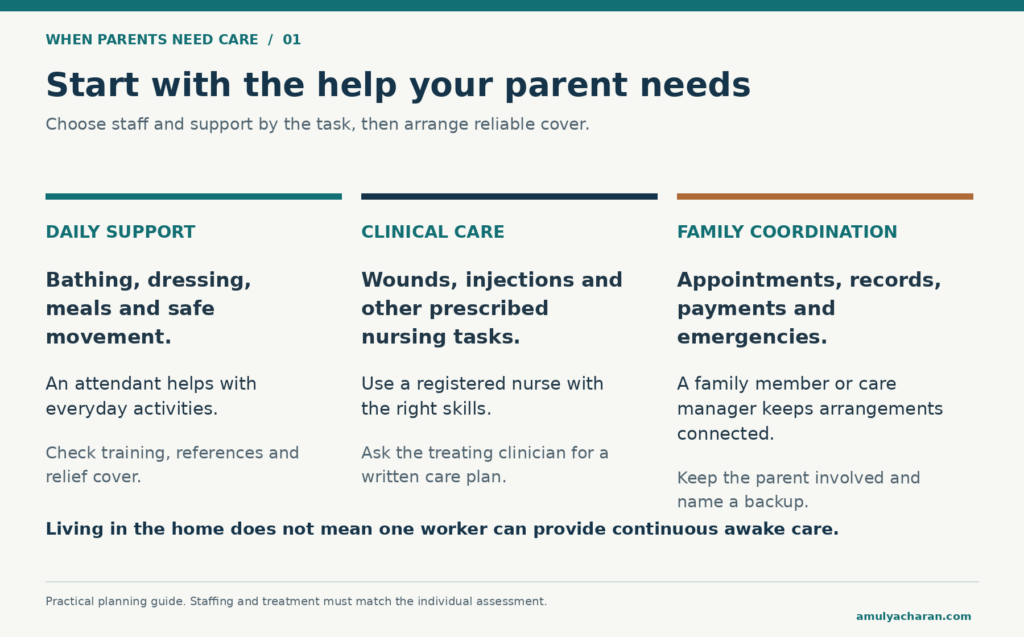
Figure 1. Choose the care role to match the assessed task. Family coordination remains important.
What the monthly budget must include
There is no single reliable national price for elder care. Costs depend on location, skills, hours, dependency and the services included. Commercial guides can help start a conversation, but they are not regulated tariffs or representative market surveys. Samarth’s Mumbai page, for example, publishes estimates of ₹20,000–₹32,000 monthly for a 12-hour attendant and ₹55,000–₹90,000 for a live-in nurse. Obtain written local quotations before making a commitment. [3]
Consider an illustrative Bengaluru household. A 78-year-old widow returns home after a hip fracture. The family allows ₹22,000 monthly for a daytime attendant, ₹14,000 for physiotherapy, ₹8,000 for medicines, tests and consumables, and ₹4,000 for equipment rental. The assumed therapy schedule is for budgeting only; her clinician and physiotherapist should determine the actual frequency and duration.
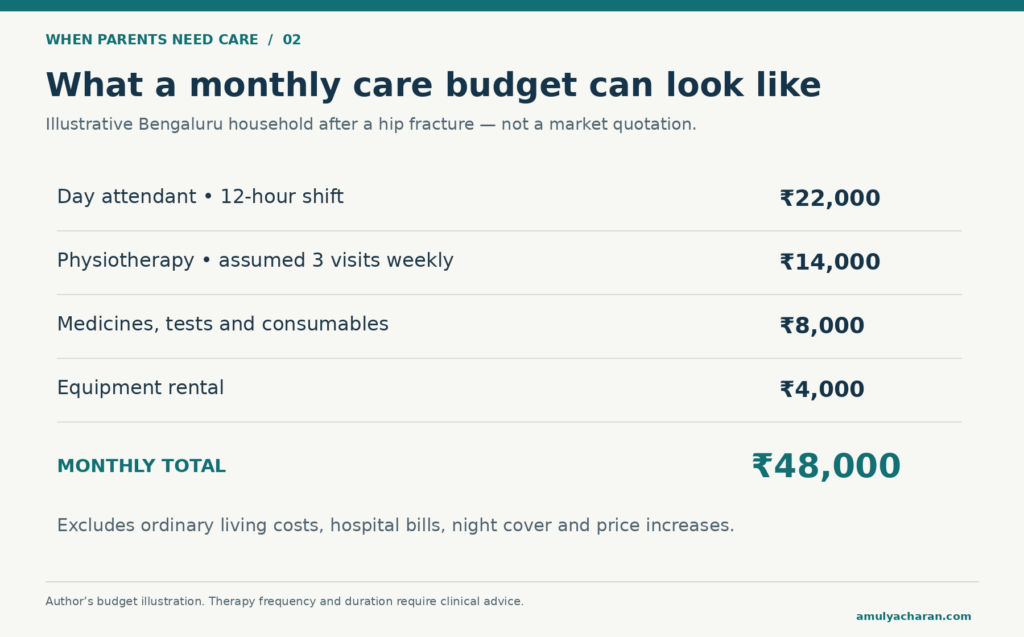
Figure 2. An illustrative monthly budget. Actual quotations, therapy needs and duration will differ.
That adds up to ₹48,000 a month, before food, electricity, rent or hospital bills. A ₹40,000 pension would not cover even this care budget. If the same level of spending continued for five years, it would total ₹28.8 lakh at unchanged prices. This is arithmetic, not a prediction that fracture recovery requires five years of identical care.
Ask what every quotation excludes: agency fees, relief staff, night cover, food and accommodation for a live-in worker, nursing supplies, transport and taxes where applicable. Budget separately for emergencies and review the arrangement as recovery or dependency changes. Buying the cheapest package can be expensive if it leaves essential hours uncovered.
Use public hospital cover carefully
Ayushman Vay Vandana is an important starting point for eligible Indian citizens aged 70 and above, irrespective of income. Launched on 29 October 2024, it extends PM-JAY hospital cover up to ₹5 lakh per family per year. That is a shared family limit, not a separate ₹5 lakh for each parent. [4,5]
Families already under PM-JAY receive an additional ₹5 lakh pool exclusively for their eligible members aged 70 and above. Those older members share that additional pool; it is separate from the cover available to younger family members. Enrolment uses Aadhaar-based e-KYC through the official beneficiary portal or Ayushman app. NHA says treatment eligibility begins immediately after enrolment, without a disease waiting period, subject to covered treatment and scheme rules. [4,5]
The card supports covered treatment at empanelled hospitals. It does not provide a general allowance for an attendant or daily supervision at home. Check that a nearby hospital offers the relevant covered service before relying on it. [4,5]
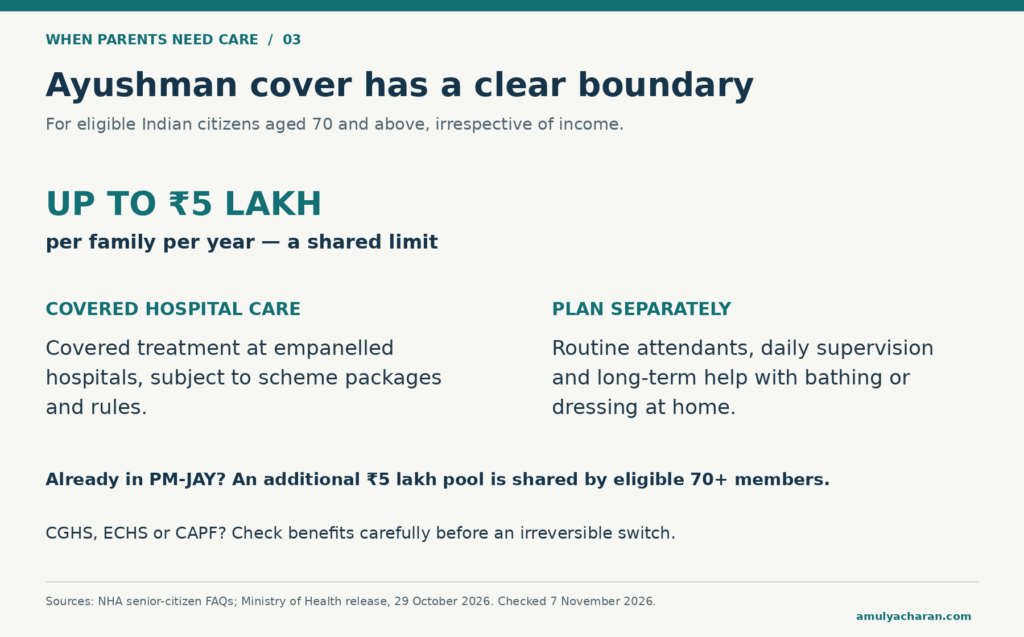
Figure 3. Hospital entitlement and everyday care expenses serve different needs. Sources [4–5].
Parents using CGHS, ECHS or Ayushman CAPF must compare benefits before switching. NHA’s FAQ describes surrendering the existing government cover for PM-JAY as a one-time choice that cannot be reversed. Private health insurance and ESIC coverage do not create the same exclusion. [4]
The government reported 96.73 lakh cards as of 31 December 2025. A later release recorded 23.46 lakh authorised hospital admissions as of 20 October 2026. Cards, admissions and individual patients are different measures; repeated admissions must not be mistaken for separate people. [5,6]
Also ask the local public hospital about geriatric services and check state pension, disability and assistive-device schemes. A certificate may establish eligibility for particular benefits; it is not a promise that every aid or concession will be free. [1]
Insurance helps but read the home care clauses
Buy and review health insurance before a crisis where possible. Earlier purchase can establish continuity of cover, but price and acceptance depend on age, medical history, product terms and underwriting. Disclose existing conditions accurately and compare co-payments, waiting periods, exclusions, room limits and renewal terms.
GST exemption for individual health insurance, including family floater policies, took effect on 22 September 2025. Group policies were excluded. Removing GST reduced the tax component; it does not prove that every customer’s final premium fell at renewal. [7]
Do not assume either that all home care is excluded or that a hospital policy funds long-term dependency. Some policies cover specified home treatment, domiciliary hospitalisation or post-hospital nursing. HDFC ERGO’s published group wording, for example, includes home nursing subject to medical necessity, a covered hospitalisation and stated daily and duration limits. Routine personal care is a different expense. Ask the insurer to identify the relevant clause and confirm authorisation requirements in writing. [8]
The tax deduction is useful but limited
For tax year 2026–27, Section 126 of the Income-tax Act, 2025 carries the health-insurance deduction formerly associated with Section 80D. The new Act took effect on 1 April 2026. The deduction is unavailable under the default new tax regime. [9,10]
Where the senior-citizen conditions apply, the parental deduction can reach ₹50,000 in a year. This is a combined parental limit, not ₹50,000 for each parent. Eligible medical expenditure on an uninsured senior parent is subject to the statutory condition that no amount has been paid to effect or keep health insurance in force for that person. Overlapping eligible parental expenditure remains subject to the combined ceiling. [9]
Premiums and eligible medical expenditure generally require non-cash payment; preventive check-ups have a cash exception and their own sub-limit. Keep bills and payment records. A deduction reduces taxable income: it does not reimburse ₹50,000 of expenditure. Nor should families assume ordinary attendant wages or an entire assisted-living bill qualify. [9]
Turn assets into usable cash with care
Some parents own a valuable house but have little monthly income. Any discussion about using that wealth should begin with their preferences and security. The house is their home before it is anyone’s inheritance.
SCSS, an annuity and a mutual-fund withdrawal plan can each support cash flow, but they work differently. The Senior Citizens Savings Scheme pays interest quarterly, so a monthly budget needs a buffer between payments. Annuity payouts and access to capital depend on the chosen contract. A systematic withdrawal plan redeems investment units; withdrawals can consume capital, and mutual-fund returns and principal are not guaranteed. [11,12,13]
Letting a room or a second property may help, provided tenancy, maintenance and safety are manageable. Downsizing can release money, but selling and moving have costs. A senior-living development is not automatically a nursing facility, and a refundable deposit is money tied up rather than income available for care.
A reverse mortgage may suit some eligible homeowners. Under NHB’s framework it requires an eligible residential property and lender approval. The loan accumulates interest and is generally settled after the last surviving borrower dies or permanently moves out. Crucially, moving permanently into a care institution can trigger repayment. Standard payouts also have a defined tenure; do not assume they continue for life. Ask specifically about spouse protection, occupancy conditions and repayment triggers. [14]
Share the work as well as the expense
A dedicated care account and a simple expense record can make contributions clearer. Agree who pays what, what spending needs discussion and who can act in an emergency. With the parent’s consent, share the information needed to coordinate care while protecting account access and sensitive records.
Equal cash contributions are not always fair contributions. One sibling may supply evenings, transport and hospital visits while another contributes more money. Discuss that openly and revisit it when work, health or income changes. An agreement can reduce misunderstandings; a spreadsheet cannot settle every family grievance.
Choose a coordinator and a backup. Keep an accessible medical summary, current prescriptions, allergies, insurance details and emergency contacts. The coordinator organises care; a parent who can make decisions remains the decision-maker. Building in regular breaks for the main carer is part of maintaining the arrangement. WHO recognises the impact of dementia care on carers’ health and recommends support and regular breaks. [2]
Check the service before trusting the label
Ask agencies for references, identity and background checks, training details, replacement arrangements and a written description of duties. Verify nurses’ professional registration and relevant experience. Police verification is a useful check, not a guarantee of competence or kindness.
Agree reasonable hours, rest, leave, accommodation and pay. Speak privately with the parent where possible and look for unexplained injuries, missed medicines, fear or financial pressure. Keep a clear route for complaints and urgent clinical escalation. Neither family coordination nor a care manager substitutes for emergency medical assessment.
If home becomes difficult, compare facilities on care capability rather than their advertised monthly fee. Basic residential accommodation, assisted living, dementia supervision and continuous skilled nursing are different services. Samarth’s Kolkata guide quotes basic residential care from ₹8,000 monthly, but that figure should not be presented as the price of comprehensive nursing care. [15]
Visit more than one facility. Ask who is physically present at night, what dependency levels are accepted, which registrations apply, how medicines are managed and how emergencies reach a hospital. Read deposits, refunds, annual increases and discharge provisions. Compare the full cost of meeting the same assessed needs at home and in the facility.
A safer home helps but cannot replace care
Well-positioned grab bars, better lighting, a shower chair and suitable walking aids can make everyday life easier. Home hazard assessment and modification can reduce falls, particularly for people already at higher risk. They work alongside appropriate strength and balance exercise, medication review and attention to vision, footwear and dizziness. [16]
Repeated falls need clinical assessment, rather than a shopping list alone. Adaptations should suit the person and be installed securely. The cost of alterations depends on the home and the work required. An emergency button also needs a response plan: somebody must be able to hear it, answer and reach the parent.
Arrange the papers before capacity becomes uncertain
Banking access, inheritance and medical decisions need separate attention. A bank nomination does not authorise day-to-day operation during the depositor’s lifetime, and payment to a nominee after death does not by itself settle inheritance rights. An “either or survivor” account can help with access under its operating terms; confirm the bank’s arrangements for hospitalisation and incapacity. [17]
Make a properly executed will. Registration is optional under Section 18 of the Registration Act; it is not a condition that makes every will valid or dispute-proof. Execution requirements depend on the applicable law. [18]
An ordinary power of attorney is not a complete answer to future mental incapacity. Under Section 201 of the Indian Contract Act, agency generally ends when the principal becomes of unsound mind, subject to legal exceptions. Ask the bank and a lawyer how authority would work if the parent lost decision-making capacity, rather than assuming a signed document lasts indefinitely. [19]
Advance medical directives were recognised by the Supreme Court in 2018, with procedures modified in 2023. Its March 2026 judgment restates safeguards, including two attesting witnesses and attestation before a notary or gazetted officer. Discuss medical wishes with the treating clinician, follow the legal procedure and keep copies available. A directive does not give relatives unrestricted authority to stop treatment; medical and procedural safeguards govern its implementation. [20]
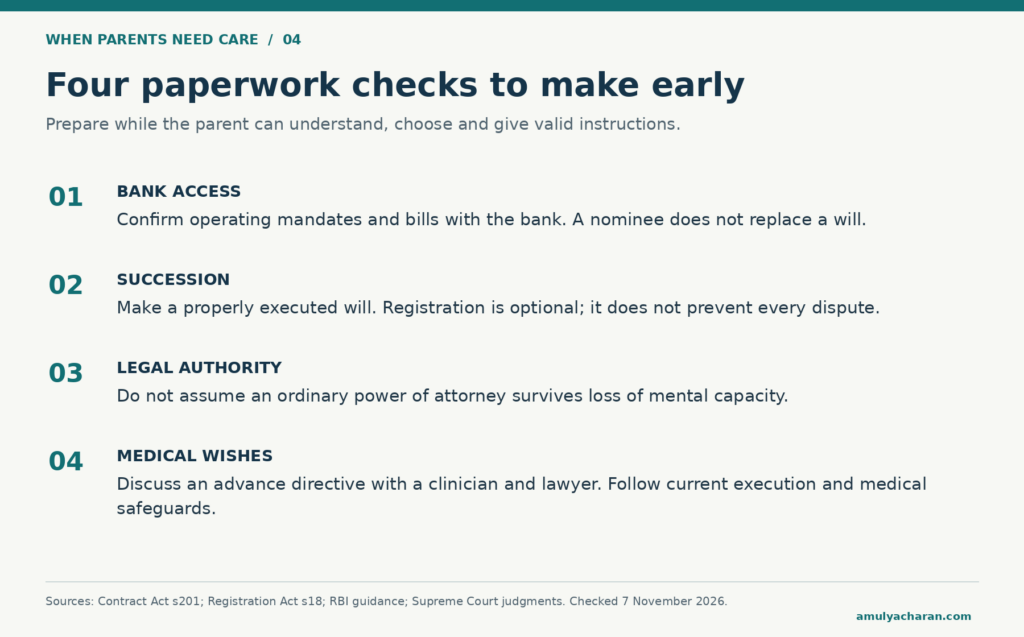
Figure 4. Banking, succession, legal authority and medical wishes require separate arrangements. Sources [17–20].
The Maintenance and Welfare of Parents and Senior Citizens Act, 2007 provides a route to seek maintenance where parents cannot maintain themselves from their earnings or property. It does not lay down an equal rota of hands-on care for siblings. Families should understand the protection without treating it as a substitute for workable arrangements. [21]
What government and insurers should make easier
Hospital cover protects savings, but everyday dependency still leaves families with difficult bills and fragmented services. Government should publish plain-language explanations of eligibility, local access points and complaint routes, backed by assisted enrolment for people who cannot navigate an app.
States should make applicable care-home requirements and inspection information easier to find. Families need clearer disclosure of staffing, clinical capability, deposits and exclusions. Training and assessment of attendants should expand, alongside stronger checks of professional nursing credentials and better working conditions.
Insurers and public purchasers could expand clearly defined rehabilitation, home nursing and palliative-care benefits where clinically appropriate. Such services may reduce avoidable hospital use, but savings should be evaluated rather than promised for every patient. Employers could help family carers through flexible work and leave policies. These are recommendations, not benefits every family can currently claim.
Start with one conversation
Ask your parents what help they would accept, where they would prefer to live and whom they trust with decisions and money. Then turn those answers into a modest plan: assess present needs, obtain quotations, check coverage, agree contributions and arrange the papers.
Review it after a fall, a hospital stay, a change in memory or the loss of the person doing most of the caring. A pension remains important. So does knowing who will be there on Tuesday morning, and how that person will be paid.
References
Sources checked for the revision dated 7 November 2026. Bracketed numbers in the article correspond to the entries below. Commercial estimates are indicative; the ₹48,000 example is an author’s budgeting illustration.
[1] UNFPA and IIPS, India Ageing Report 2023. Demographic projections and LASI 2017–18 findings. Source link
[2] WHO, Dementia fact sheet. Care needs and support for carers. Source link
[3] Samarth, Elder Care Services in Mumbai. Commercial provider estimates, not a market survey or binding quotation. Source link
[4] National Health Authority, FAQs on PM-JAY benefits for senior citizens. Shared limits, enrolment and scheme choices. Source link
[5] Ministry of Health and Family Welfare, Ayushman Vay Vandana marks two years, 29 October 2026. Source link
[6] Ministry of Health and Family Welfare, Update on Ayushman Vay Vandana Card, 3 February 2026. Card count as of 31 December 2025. Source link
[7] Department of Financial Services, FAQs on GST exemption for individual life and health insurance. Effective 22 September 2025. Source link
[8] HDFC ERGO, Group Health Insurance policy wording, UIN HDFHLGP24095V032425, Home Nursing Cover. Product example; check the individual policy schedule. Source link
[9] Income Tax Department, Income-tax Act 2025, Sections 126 and 202. Deduction conditions and new-regime exclusions. Source link
[10] Ministry of Finance, Income-tax Act 2025 comes into force from 1 April 2026, release dated 1 April 2026. Source link
[11] National Savings Institute, Senior Citizens Savings Scheme. Quarterly interest and scheme conditions. Source link
[12] AMFI, Risks in Mutual Funds. Returns and principal are not guaranteed. Source link
[13] SEBI-hosted mutual-fund scheme document, Systematic Withdrawal Plan provisions. Withdrawals operate through redemption. Source link
[14] National Housing Bank, Reverse Mortgage Loan guidelines and settlement conditions. Confirm current lender terms. Source link
[15] Samarth, Elder Care in Kolkata for NRI Families. Commercial published estimates; care levels and deposits differ. Source link
[16] WHO, Falls fact sheet. Individual assessment, exercise, home hazards and other prevention measures. Source link
[17] RBI, Master Circular on Customer Service in Banks, 1 July 2010, section 20.1. Bank settlement and legal-heir rights. Confirm current operating procedures with the bank. Source link
[18] India Code, Registration Act 1908, Section 18. Optional registration of wills. Source link
[19] Government of NCT of Delhi, Indian Contract Act 1872, Sections 201–202. Termination of agency and exception for an agent’s interest. Source link
[20] Supreme Court of India, judgment dated 11 March 2026, MA 2238 of 2025. Discussion of Common Cause 2018 and modifications in 2023, including advance-directive safeguards. Source link
[21] India Code, Maintenance and Welfare of Parents and Senior Citizens Act 2007, particularly Sections 2, 4 and 5. Source link
