Two Roads to Progress: China’s Command and India’s Consent
Introduction
China built at breathtaking speed. India advanced through argument, compromise and elections. The next phase will test whether China can become more adaptable – and whether India can become more capable.
Few comparisons reveal more about the possibilities and limits of development than China and India. Their histories show that progress depends not only on how fast a state can act, but also on whether institutions can hear bad news, correct mistakes and convert national ambition into wider human opportunity.
1.0 Two Nations, Two Organising Principles
India and China entered the modern era within a few years of each other. India became independent in 1947 and a republic in 1950; the People’s Republic of China was established in 1949. Both inherited mass poverty, low life expectancy, limited industrial capacity and societies scarred by conflict, political upheaval and foreign domination.
Their subsequent journeys followed markedly different political paths. China concentrated authority within a one-party state capable of directing capital, land, infrastructure and industrial policy from the centre. India dispersed power through a federal, multiparty democracy in which governments, courts, legislatures, states, organised interests and voters continually negotiate the terms of change.
That difference shaped the pace and texture of development. China acquired an exceptional ability to build, coordinate and scale. India preserved broader political participation and more avenues through which official decisions could be challenged, but frequently paid for that consent in delay and uneven execution.
The contrast is tempting to describe as efficiency versus freedom. Reality is less tidy. China has internal mechanisms for consultation, experimentation and policy adjustment, even though they operate within the authority of the Communist Party. India holds competitive elections, but democratic legitimacy has not always guaranteed civil liberty, administrative competence or dependable public services. The better question is how each system combines state capacity, public accountability and institutional adaptability – and what happens when one of those qualities is missing.
2.0 China: The Power of Coordinated Scale
China’s transformation since the late 1970s is among the most consequential development stories of the modern era. Reforms initiated under Deng Xiaoping opened the country to markets, private enterprise, foreign investment and international trade, while preserving the Communist Party’s ultimate control over the state and the strategic direction of the economy.
This hybrid model allowed China to mobilise resources at a scale few countries could match. State-owned banks supplied credit, local governments assembled land and infrastructure, and industrial policy supported sectors considered strategically important. Foreign technology and capital were combined with high domestic savings, fierce competition and the migration of hundreds of millions of workers from low-productivity agriculture into cities and factories.
2.1 Manufacturing, Infrastructure and Poverty Reduction
China became the world’s largest manufacturing economy and a central hub in global supply chains. Dense industrial clusters brought together suppliers, transport links, skilled labour, engineers and finance. The result was not merely the ability to make products cheaply, but the capacity to make complex products quickly, repeatedly and in enormous volumes.
Its infrastructure expansion was equally striking. China constructed the world’s largest high-speed rail network, modernised ports and highways, expanded urban transit and built industrial regions around new transport links. What might take a plural political system years of consultation could often be moved in China through administrative direction.
The most important achievement was social rather than architectural. The World Bank estimates that close to 800 million people in China rose above the international extreme-poverty line over roughly four decades. China declared extreme rural poverty eliminated in 2021 under its national standard. That did not end economic vulnerability, especially when higher thresholds appropriate to an upper-middle-income country are used, but the historical scale of the improvement is beyond dispute.
China also made major gains in life expectancy, education and basic services. In the United Nations Development Programme’s 2025 Human Development Report, based principally on 2023 data, China ranked 78th out of 193 countries and territories and was classified as a high-human-development country.
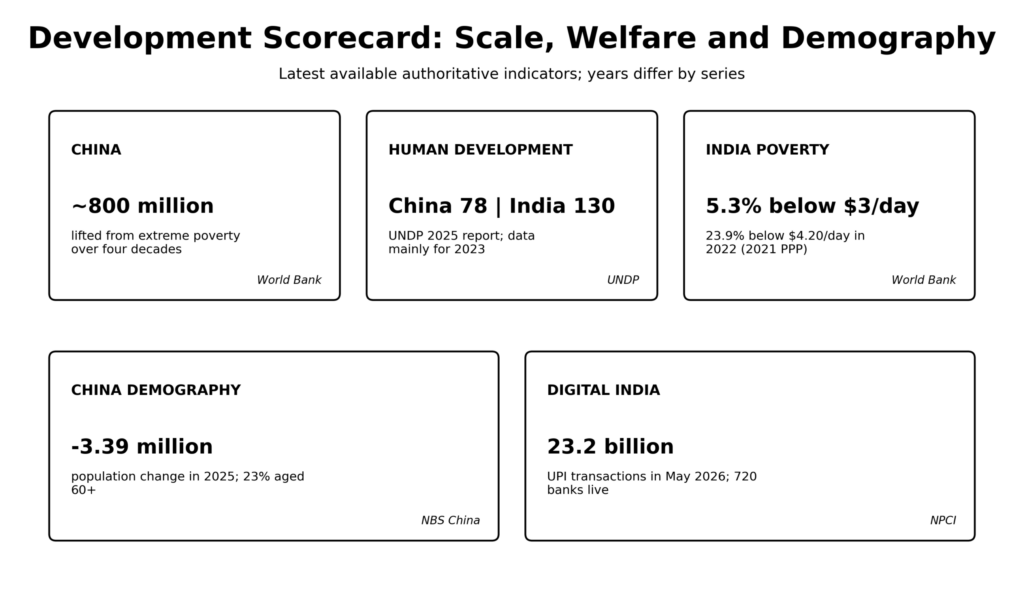
Figure 1. Selected development indicators. Years and definitions differ by series; see references.
2.2 Industrial Policy and the Clean-Energy Surge
More recently, industrial policy helped Chinese firms establish commanding positions in solar panels, batteries and electric vehicles. China now accounts for more than 80% of global solar photovoltaic module manufacturing capacity, according to the International Energy Agency, and an even larger share of some upstream components. That dominance has helped reduce clean-energy costs worldwide.
Success, however, has brought its own complications: overcapacity, squeezed margins, trade disputes and concern elsewhere about dependence on concentrated supply chains. China’s clean-energy leadership also sits beside continuing coal dependence. In 2025, coal still generated about 55% of China’s electricity, even as the share declined and low-emissions generation expanded rapidly. China is therefore both a driver of the energy transition and a reminder of how difficult it is to reconcile industrial growth, energy security and decarbonisation.
3.0 The Liabilities of Command
The concentration of authority that makes rapid mobilisation possible can also make mistakes harder to expose. China uses pilot programmes, bureaucratic review and internal consultation, but it lacks the independent electoral competition, media scrutiny and judicial checks that can force leaders to confront unwelcome evidence in public.
3.1 Demography and the Legacy of Population Control
China’s demographic reversal is the clearest example. The one-child policy was not the sole cause of falling fertility. Urbanisation, later marriage, women’s education, expensive housing and childcare, and changing family preferences have driven birth rates down across East Asia. Yet China’s restrictive population policies accelerated the shrinking of younger cohorts and contributed to the speed of ageing.
Official figures show that China’s population fell by 3.39 million in 2025. People aged 60 or above accounted for 23% of the population. The country still possesses a vast labour force and domestic market, but the direction is unmistakable: fewer workers will support more retirees, increasing pressure on pensions, healthcare and families.
This does not make decline inevitable. China retains formidable infrastructure, technical expertise and industrial depth. It does mean that future growth must rely more on productivity, innovation and institutional adaptability than on an expanding workforce.
3.2 Property, Debt and the Limits of Investment-Led Growth
China’s earlier growth model leaned heavily on property, infrastructure and investment financed through local governments, state-linked institutions and bank credit. The model created employment and modern assets, but it also encouraged leverage, dependence on land sales and projects whose economic returns were sometimes uncertain.
The prolonged property downturn has exposed indebted developers, strained local-government finances and weakened household confidence. Beneath this lies a larger rebalancing problem. China has long depended more on investment and exports than on household consumption. The IMF continues to argue that stronger domestic consumption will require structural changes, including better social protection, higher household income and reforms to local-government finance.
3.3 The Political Cost of Restricted Scrutiny
China’s vulnerabilities are not only economic. Its development model carries human and political costs that conventional output measures do not capture. The state maintains extensive control over political organisation, journalism, civil society and online expression. International bodies and human-rights organisations have documented arbitrary detention, extensive surveillance and serious abuses affecting Uyghurs and other predominantly Muslim minorities in Xinjiang. Dissidents, lawyers, activists and journalists can face severe penalties for challenging Party authority.
China has expanded freedom from hunger, illiteracy and preventable disease for hundreds of millions of people. At the same time, it sharply restricts freedom of expression, association and political choice. A serious assessment must hold both truths at once.
4.0 India: Development Through Democratic Negotiation
India’s progress has been slower, more uneven and less visually dramatic. It has nevertheless become one of the world’s largest economies while retaining competitive elections, federal government and repeated transfers of political power.
Economic liberalisation since 1991 reduced many licensing restrictions, encouraged private investment and integrated India more deeply into the world economy. Information technology, pharmaceuticals, telecommunications, financial services and parts of the automobile industry developed internationally competitive capabilities. The country’s rise has often looked improvised rather than choreographed – but it is no less real for that.
The IMF’s April 2026 outlook projected calendar-year growth of 6.5% for India and 4.4% for China in 2026. Forecasts are not outcomes, and rankings measured in current US dollars move with exchange rates and revisions. Even with those cautions, India’s economic weight is increasing.
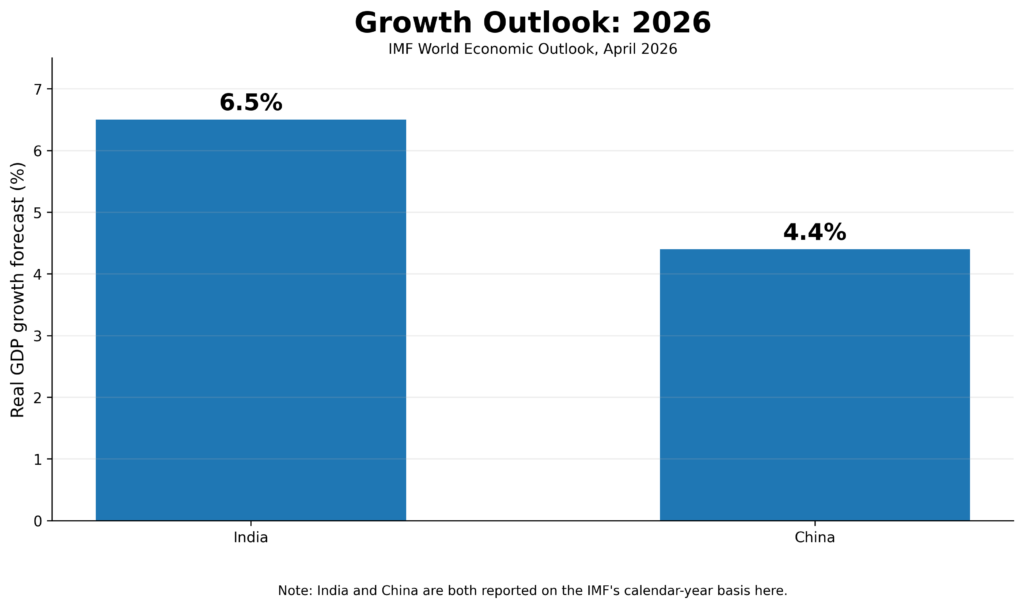
Figure 2. IMF real GDP growth forecasts for 2026.
4.1 Poverty Reduction and Digital Public Infrastructure
India has also reduced extreme poverty substantially. The World Bank reports that 5.3% of the population lived below the revised international extreme-poverty line of $3.00 per person per day in 2021 purchasing-power-parity terms in 2022. The broader picture is more demanding: 23.9% remained below the $4.20 line used for lower-middle-income economies. Extreme destitution has fallen sharply, but insecurity still touches hundreds of millions of lives.
Subsidised food, rural employment support, housing, sanitation, financial inclusion and direct benefit transfers all contributed, though results vary greatly among states and districts. India’s digital public infrastructure has strengthened aspects of state capacity. Aadhaar gave most residents a digital identity number, while the Unified Payments Interface made real-time mobile payments widely accessible. In May 2026 alone, UPI processed about 23.2 billion transactions through 720 participating banks.
Scale should not obscure safeguards. Authentication failures can exclude legitimate beneficiaries, while large-scale data collection raises questions about privacy, consent, surveillance and information security. Digital reach is most valuable when matched by accessible grievance mechanisms and enforceable data protection.
4.2 Federalism, Elections and the Capacity to Reverse Course
India’s institutional advantage is not that it avoids mistakes. It plainly does not. Its advantage is that decisions can be challenged through elections, legislatures, courts, state governments, journalism, protest and civil society.
The repeal of the three central farm laws passed in 2020 illustrates both sides of that process. The government regarded them as agricultural-market reforms; many farmers feared weaker procurement protections and greater dependence on large private buyers. Sustained protest ultimately forced withdrawal. The episode demonstrated democratic responsiveness, but it also exposed failures of consultation, legislative process and political trust.
India’s democratic history has never been a seamless march towards liberty. During the Emergency of 1975-77, elections were suspended, the press was censored and opponents were detained. More recently, concerns have intensified over media freedom, internet restrictions, investigative and national-security laws, civil-society regulation and the independence of public institutions. India’s institutions have proved resilient, but resilience is not the same as invulnerability.
5.0 The Demographic Dividend Is Not Automatic
India’s younger population offers an advantage China no longer possesses: a working-age population expected to keep expanding for some time. But demography is opportunity, not destiny. A young population becomes an economic asset only when people are healthy, educated, skilled and productively employed.
Employment is therefore the central test of India’s model. The country’s growth has been driven more by services than China’s was at a comparable stage. High-value services create wealth and global capabilities, but they cannot absorb every worker leaving agriculture or entering the labour force without advanced qualifications.
5.1 Employment, Skills and the Missing Manufacturing Engine
India needs a broader employment base in manufacturing, construction, logistics, tourism, healthcare, food processing and modern agriculture. That requires dependable electricity and transport, simpler regulation, access to finance, better vocational training and cities capable of accommodating migration and industrial activity.
The difficulty is not simply unemployment. It is underemployment, low productivity and the scarcity of stable, well-paid work. Women’s employment is especially important. India cannot fully realise a demographic dividend while millions of women face barriers involving safety, mobility, childcare, social norms and the availability of suitable jobs.
6.0 The Liabilities of Consent
India’s democratic framework supplies legitimacy and political continuity, but it has not consistently delivered effective public services. In the UNDP’s 2025 report, India ranked 130th out of 193 countries and territories, substantially below China. The gap reflects accumulated differences in income, schooling, health and life expectancy.
6.1 Uneven Public Services and Weak Local Capacity
India has expanded roads, electricity, sanitation, digital access and financial inclusion. Yet the quality of education, healthcare, municipal services and environmental management remains uneven. The federal structure is both a constraint and a laboratory: some states have developed strong health, welfare or industrial systems, while others struggle to convert national schemes into reliable local delivery.
India is therefore not one development system but many. A policy designed in New Delhi is only as effective as the state, district or municipality that implements it. That variation is frustrating, but it also allows successful approaches to be tested, copied and adapted rather than imposed uniformly.
6.2 Delay, Fragmentation and Institutional Pressure
Infrastructure and industrial projects must navigate land acquisition, environmental review, overlapping jurisdictions and litigation. These procedures protect rights and public interests. They become economically damaging when rules are unclear, agencies conflict or disputes remain unresolved for years.
The answer is not to remove safeguards. It is to make them transparent, predictable and time-bound. Fiscal politics requires the same discrimination. Social transfers and subsidies have supported food security and poverty reduction; poorly targeted or election-driven commitments can crowd out health, education, infrastructure and local-government capacity.
India’s challenge is not to replace democratic consent with central command. It is to build a more capable democratic state – one that can complete projects, enforce rules, provide services and protect rights without allowing consultation to harden into paralysis.
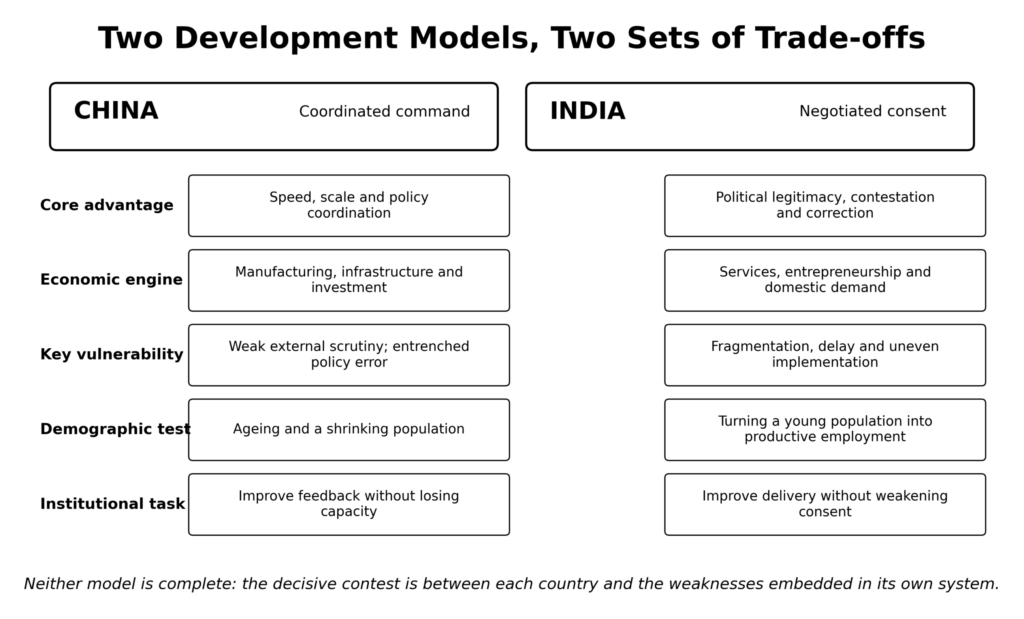
Figure 3. The central strengths, vulnerabilities and institutional tasks of the two models.
7.0 Beyond GDP: What Counts as Progress?
The comparison ultimately depends on what we count as development. Measured by manufacturing scale, infrastructure, export capacity and material transformation, China remains far ahead. Its poverty reduction is one of the great economic achievements of the age.
Measured by electoral competition, legal challenge and organised participation, India retains important advantages, even as those advantages face pressure. Amartya Sen’s idea of development as freedom offers a broader standard: progress is not simply higher income or more concrete poured. It is the expansion of people’s practical ability to live healthy lives, gain education, earn livelihoods, participate in society and exercise meaningful choice.
China has expanded many material capabilities while restricting political ones. India has preserved wider political participation but delivered health, education, employment and public services less consistently. The contrast is not between a country that develops and one that debates. It is between two incomplete forms of capability: the capacity of the state to act and the capacity of society to question, participate and correct.
8.0 The Test Ahead: Adaptability Versus Delivery
China and India are not fixed models with predetermined futures. China combines extraordinary administrative and industrial capability with limited independent scrutiny. Its central challenge is adaptability: whether it can manage demographic decline, property stress, debt and slower productivity growth while improving the quality of policy feedback.
India combines political competition and institutional pluralism with uneven administrative performance. Its central challenge is delivery: whether it can create productive employment, strengthen human capital, improve local government and preserve constitutional freedoms while building a more effective state.
| China must become more adaptable without losing its capacity to act. India must become more capable without weakening political consent and institutional restraint. |
9.0 Conclusion: The Race Is Against Their Own Weaknesses
The most revealing contest between China and India is not a horse race for the next GDP ranking. It is a test of whether two very different systems can repair the weaknesses produced by their own success.
China’s command model proved that a state with concentrated power can transform infrastructure, industry and living standards at astonishing speed. Yet the same concentration can suppress feedback, entrench costly choices and narrow the space in which citizens can question authority. India’s consent-based model proved that mass democracy can survive poverty, diversity and repeated political conflict. Yet consent without administrative capacity can leave citizens waiting too long for schools that teach, cities that function and jobs that dignify work.
Neither country can simply borrow the other’s system. China cannot manufacture political trust as it manufactures solar panels. India cannot issue an executive order and conjure competent local government. Each must reform from within its own institutional character.
That is why the next chapter will be decided less by ideology than by learning. Can China hear inconvenient truths before they become crises? Can India turn argument into execution without silencing argument itself? The country that answers its harder question will not merely grow faster. It will offer the more durable definition of progress.
10.0 Questions for the Reader
• When judging national progress, should we give greater weight to the speed of material improvement or to the institutions that make improvement accountable?
• Which weakness is more difficult to correct: concentrated power without external scrutiny, or democratic consent without dependable state capacity?
• As India and China shape the global economy, what lessons should other developing countries borrow – and which should they resist?
11.0 Detailed References
Sources were selected for authority and recency. Statistical years and definitions differ across series; readers should consult the cited source before reusing a figure outside its stated context.
1. International Monetary Fund. World Economic Outlook, April 2026: Global Economy in the Shadow of War. Country projections include 2026 real GDP growth of 6.5% for India and 4.4% for China. Published 14 April 2026. https://www.imf.org/en/Publications/WEO/Issues/2026/04/14/world-economic-outlook-april-2026
2. International Monetary Fund. World Economic Outlook Update, July 2026: Global Economy in Crosscurrents of War and Technology. Latest global update available at preparation. https://www.imf.org/en/Publications/WEO/Issues/2026/07/08/world-economic-outlook-update-july-2026
3. World Bank. Four Decades of Poverty Reduction in China: Drivers, Insights for the World, and the Way Ahead. The accompanying release states that nearly 800 million people rose above the international extreme-poverty line over four decades. 2022. https://www.worldbank.org/en/news/press-release/2022/04/01/lifting-800-million-people-out-of-poverty-new-report-looks-at-lessons-from-china-s-experience
4. World Bank. India country data: poverty headcount ratio at $3.00 a day (2021 PPP), 5.3% in 2022. Accessed July 2026. https://data.worldbank.org/country/india
5. World Bank. Poverty and Equity Brief: India, October 2025. Includes estimates using the $3.00 and $4.20 poverty lines and discussion of employment and vulnerability. https://documents1.worldbank.org/curated/en/099722104222534584/pdf/IDU-25f34333-d3a3-44ae-8268-8683e3bc5a5.pdf
6. United Nations Development Programme. Human Development Report 2025: A Matter of Choice – People and Possibilities in the Age of AI. China ranked 78th and India 130th, based principally on 2023 data. https://hdr.undp.org/content/human-development-report-2025
7. National Bureau of Statistics of China. Statistical Communiqué of the People’s Republic of China on the 2025 National Economic and Social Development. Reports a year-end population of 1,404.89 million, down 3.39 million, with 23% aged 60 or above. Published 28 February 2026. https://www.stats.gov.cn/english/PressRelease/202602/t20260228_1962661.html
8. International Energy Agency. Renewables 2025. Reviews global renewable capacity and continuing concentration of key clean-energy supply chains in China. https://www.iea.org/reports/renewables-2025
9. International Energy Agency. Advancing Clean Technology Manufacturing. Reports that China accounts for more than 80% of global solar PV module manufacturing capacity and 95% of wafer capacity. https://www.iea.org/reports/advancing-clean-technology-manufacturing
10. International Energy Agency. Global Energy Review 2026: Electricity Supply. Reports coal’s share of Chinese electricity generation at 55% in 2025. https://www.iea.org/reports/global-energy-review-2026/electricity-supply
11. National Payments Corporation of India. UPI Product Statistics. May 2026: approximately 23.202 billion transactions and 720 banks live on UPI. https://www.npci.org.in/what-we-do/upi/product-statistics
12. Government of India. The Constitution of India and official national portal materials on Independence Day and Republic Day; India became independent in 1947 and a republic in 1950. https://knowindia.india.gov.in/
13. Sen, Amartya. Development as Freedom. Oxford University Press, 1999. Conceptual framework linking development to substantive human capabilities and freedoms.
14. Acemoglu, Daron, and James A. Robinson. Why Nations Fail: The Origins of Power, Prosperity, and Poverty. Crown, 2012. Institutional interpretation of inclusive and extractive political-economic systems.
15. Office of the United Nations High Commissioner for Human Rights. Assessment of Human Rights Concerns in the Xinjiang Uyghur Autonomous Region, People’s Republic of China. 31 August 2022. https://www.ohchr.org/en/documents/country-reports/ohchr-assessment-human-rights-concerns-xinjiang-uyghur-autonomous-region
12.0 Infographic Source Notes
Figure 1 combines World Bank, UNDP, National Bureau of Statistics of China and NPCI indicators. It is a visual scorecard, not a single-year statistical comparison.
Figure 2 uses IMF April 2026 World Economic Outlook calendar-year forecasts. Forecasts are subject to revision and should not be read as actual outcomes.
Figure 3 is an editorial synthesis of the article’s institutional argument rather than a statistical ranking.
————————————————————————————————————————————
Amulya Charan writes on energy systems, infrastructure economics, and development policy at amulyacharan.com.

Excellent writeup covering the crux of the difference between China and India’s economic development, demographics and future scenarios. Congratulations sir